Issue 02 · November 2026 · All / Operations
What is The Most Profitable Racket Sport Business? Our Top 7
Discover true revenue per square foot across seven racquet sports, comparing urban padel and pickleball yields to traditional tennis clubs.
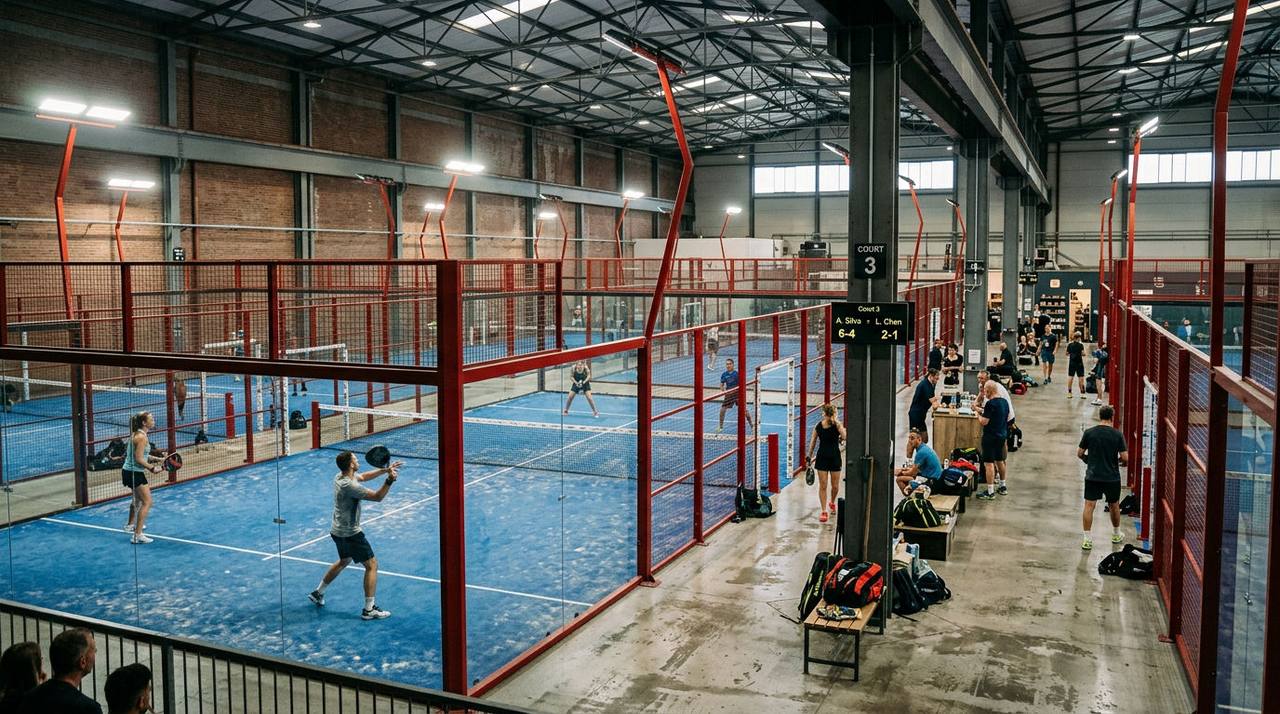
Evaluating racquet sports club profitability requires looking past the hype and examining true revenue per square foot across urban and suburban footprints. Measuring net return on physical floor space shows that urban indoor padel leads the market, generating $18 to $32 profit per square foot. Traditional tennis venues that take up four to five times more room yield just $3 to $7. Pickleball returns $15 to $25 and squash brings in $12 to $22.
Relying entirely on high-yield density, however, brings operational vulnerabilities. Chasing peak square-foot margins without protecting player data or managing venue constraints leaves a club exposed the moment competing courts open nearby. To really compare the business of racket sports clubs, I measured annual net operating profit per square foot of court space and mandatory safety run-offs across active facilities. Ancillary spaces like locker rooms and lounges were excluded to keep the spatial comparison strictly about playing surfaces.
True Revenue Per Square Foot Across 7 Racquet Sports
Square-foot yields vary wildly based on spatial footprints and player rotation speeds. The table below outlines how seven commercial racquet sports compare across revenue density and operational drawbacks.
| Sport | Net Profit / Sq Ft | Ideal Venue Footprint | Revenue Catalyst | Primary Constraint |
|---|---|---|---|---|
| Urban Indoor Padel | ~$18-$32 per sq ft profit | Indoor glass court | Highest urban square foot yield | Risk of market saturation and price drops |
| Pickleball | ~$15-$25 per sq ft profit | Hard court | High player turnover on compact footprint | Requires strong acoustic management |
| Squash | ~$12-$22 per sq ft profit | Enclosed glass-back court | High density per square foot in urban cores | Niche player acquisition ceiling |
| Table Tennis | ~$10-$20 per sq ft profit | Indoor hall flooring | Micro-footprint that drives F&B sales | Lower court rental rate ceiling |
| Badminton | ~$8-$16 per sq ft profit | Wooden sprung flooring | High multi-court density potential | Strict ceiling height constraints |
| Traditional Tennis | ~$3-$7 per sq ft profit | Clay or hard court | Lower rent costs enable large total area yields | Massive land footprint rules out urban cores |
| Private Country Club Tennis | ~$2-$6 per sq ft profit | Maintenance-intensive grass or clay | High ancillary membership dues and amenity spend | Poor direct square foot court yield |
The Reality of Racquet Sports Club Profitability
Urban facilities facing punishing industrial rents must prioritize compact layouts like padel, pickleball, and table tennis. When the cost per square foot drops in outer-suburban regions, adding traditional tennis provides scale and community stability.
Vendors still typically choose to double down on one sport type, and that is a strategic error. Fashions change fast in racquet sports, and what draws a crowd this year might struggle in five years. Many players cross over between disciplines; table tennis players are often introduced via tennis, and pickleball players frequently begin on tennis or table tennis courts.
Building a multi-sport facility shields your capital against single-sport saturation. Combine small-footprint courts with dedicated food and beverage service, and host the operation on an independent, branded booking system to retain direct control over your member database.
1. Urban Indoor Padel
Padel generates between $18 and $32 in profit per square foot, making it the most aggressive square-foot earner in commercial racquet sports. A standard 200-square-meter enclosure accommodates four players simultaneously, allowing operators to fit two to three functional padel courts inside the clearance zone of a single traditional tennis court.
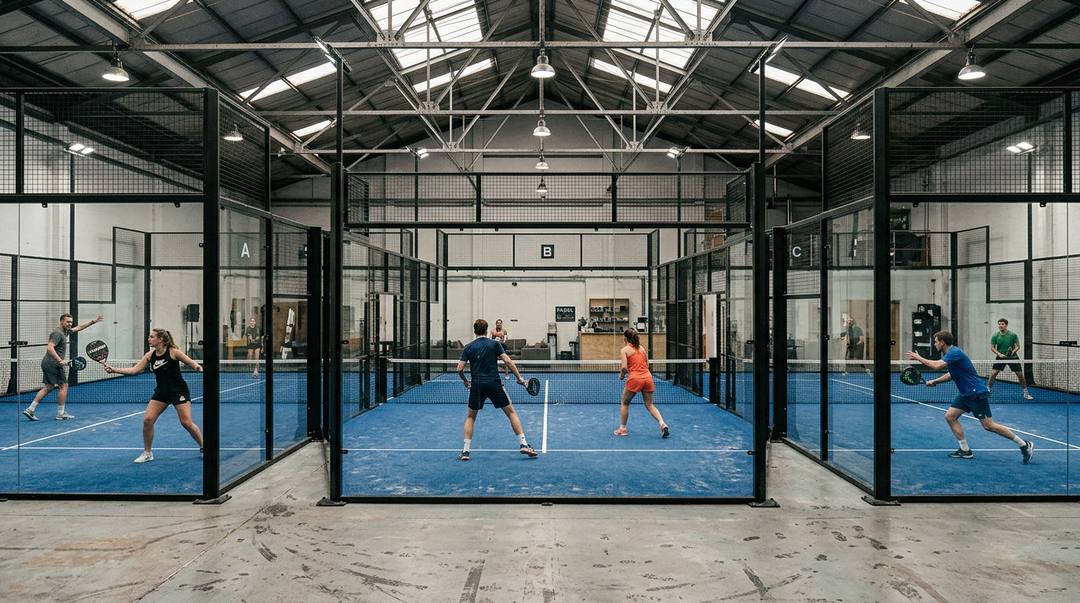
"I do think that padel is being overhyped right now. Profitability per square foot is excellent, and it is currently in a boom, but it is facing court shortages around the world. Once court builds catch up with demand, prices will inevitably become more competitive, and that profitability will have to fall."
We can look at Sweden as a classic example, where renting a padel court was extremely expensive and growth was fast, but the market quickly became saturated with venues. Because most of them used shared marketplace applications, once one club started to lower its prices, all clubs in the area were affected. It became a domino effect where profitability fell very fast, and clubs started to close down quickly.
A major contributor to that vulnerability is how operators handle customer bookings. When operators open a new facility, they often sign up for shared marketplace networks. In Europe, that usually means Playtomic; in North America, clubs often split across CourtReserve, Playbypoint, or ClubAutomation. Most shared marketplace systems only really service one sport well, such as Playtomic, which does offer multisports but is only really used by padel players. If you open in a popular urban space and you're the only one in your area, you have a great chance of success.
If two more clubs open nearby and you're all on a shared marketplace application, you've just lost two-thirds of your revenue. When running clinics to introduce new players, booking through a marketplace app means the club doesn't own their data, and the platform actively advertises competing facilities to your own customers. Operators protect their margins by steering players into a direct booking engine like Matchi or Six Love which both offer locked down white label booking systems for all rackets sports. You won't need to worry about losing players so easily of a competing venue opens up nearby.
2. Pickleball
Pickleball commands roughly $15 to $25 in profit per square foot by packing high player density onto a 20-by-44-foot court. A standard tennis court footprint easily converts into four dedicated pickleball courts, supporting 16 paying players per hour instead of two or four. Because games typically resolve within 45 to 60 minutes, customer turnover remains rapid throughout morning and evening peaks.
The catch with pickleball lies in acoustics. The high-frequency impact crack of composite paddles striking hard plastic balls creates immediate friction with residential neighbors and commercial landlords. Sound dampening curtains, specialized wall baffles, and acoustic fencing are mandatory investments for indoor operators who want to avoid lease disputes or municipal noise violations.
3. Squash
A regulation squash court occupies just 62.4 square meters, generating consistent urban profits of $12 to $22 per square foot. The vertical, enclosed nature of squash means operators can install courts in underground basements, windowless downtown sub-levels, or tight municipal buildings where other racquet sports cannot fit.
Player acquisition remains the limiting factor. Squash demands high cardiovascular output and technical racket discipline, which caps casual drop-in rates compared to social doubles sports. Most squash facilities operate on rigid membership subscription models with low attrition, but expanding the player pipeline requires active community outreach and structured ladder leagues.
4. Table Tennis
Table tennis makes little financial sense as a standalone athletic club, but it is an outstanding margin-booster for social hospitality venues and urban multi-sport hubs. While serious table tennis players rarely accept court fees above $10 to $15 an hour, casual groups playing ping-pong will easily spend $40 an hour on craft beer and shareable plates.
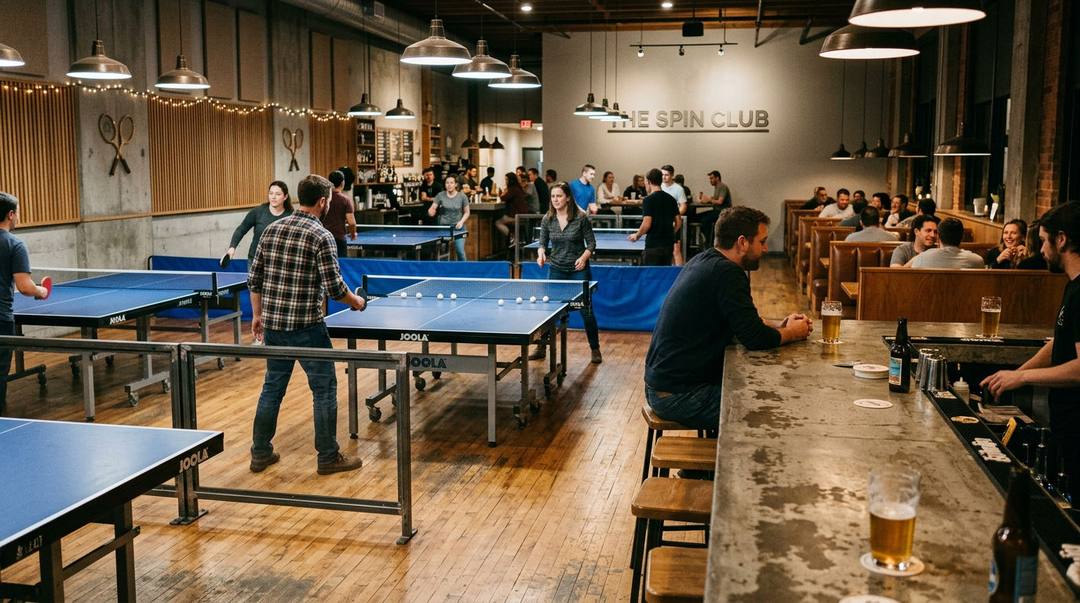
Where table tennis excels is acting as a catalyst for food and beverage sales. If you're in an urban location where square footage costs are high, having facilities such as pickleball and table tennis alongside an area for great food and drink will help to maximize the profitability per square foot. Ensure those extra facilities are well advertised within your booking system; otherwise, they can just become dead space in your venue.
5. Badminton
A standard court measures 13.4 by 6.1 metres (44 by 20 feet), which makes it simple to run four to six courts side by side on point-elastic polyurethane or sprung hardwood. The catch is that competitive players will not tolerate low-friction concrete surfaces, and retrofitting proper subfloors adds $12,000 to $18,000 per court before you hang a single net.
The primary hurdle is vertical clearance. Official play requires an unobstructed ceiling height of at least 7.5 to 9 meters, completely free of hanging lighting rigs, low heating pipes, or structural crossbeams. That requirement eliminates cheaper, low-clearance industrial units and forces operators to compete for premium high-bay distribution properties.
6. Traditional Tennis
A full-sized tennis court with standard run-offs swallows approximately 7,200 square feet of real estate. Traditional tennis clubs require much more space. So they are not feasible in an urban environment and tend to sit on the outskirts of cities or in more rural locations.
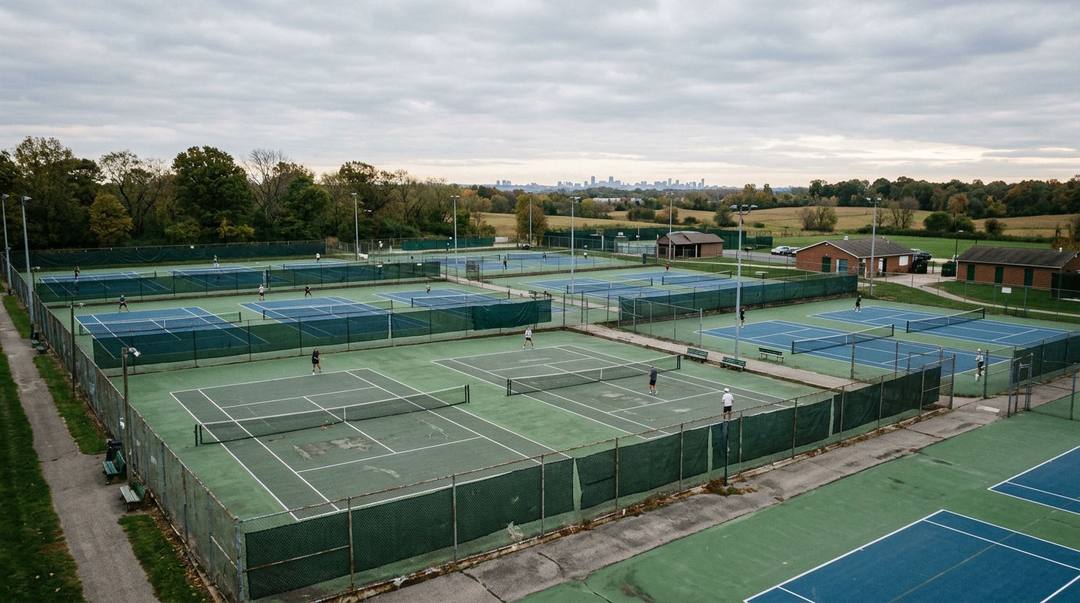
Lower square-foot yields do not make tennis an inferior commercial venture. Because rent is considerably lower on urban outskirts, tennis venues tend to take up larger areas—often four to five times the size of a padel club—bringing the overall profitability higher. An operator managing a sprawling ten-court outdoor facility on inexpensive acreage often nets substantial gross annual profits despite modest yields per square foot.
7. Private Country Club Tennis
Private country club tennis courts yield just $2 to $6 in direct court profit per square foot. On natural grass or clay, daily maintenance demands such as rolling, sweeping, surface watering, and line marking consume considerable staff labor.
These courts function as retention amenities rather than standalone revenue engines. Clubs balance out low court density with mandatory initiation fees, ongoing monthly membership subscriptions, private instruction markups, and minimum food and beverage requirements. The court surface itself is a loss leader designed to sell an entire lifestyle package.
How to Build a Sustainable Racquet Club
Commercial viability comes down to matching your real estate footprint with player turnover velocity. Urban investors must secure multi-sport layouts on independent software platforms to survive market saturation. Operators working with affordable acreage on the city outskirts should embrace traditional tennis for total acreage yields. Before signing an industrial lease, audit your local player demographics against your square-foot rent to ensure your court mix aligns with local demand.
Protect your margins by keeping your customer database away from third-party marketplace apps. Dense urban sheds demand high-rotation micro-footprints like padel and pickleball paired with independent, club-owned booking portals. When land is cheap enough to spread into multi-court tennis, protect your downside by adding social table tennis and food service so a dip in one sport never threatens the whole club.
FAQ
How do sound dampening costs impact the startup budget for an indoor pickleball facility?
Acoustic treatments like wall baffles and sound-dampening curtains typically add $15,000 to $35,000 to a mid-sized warehouse buildout, depending on ceiling height and local municipal noise codes.
Why do third-party booking apps pose a financial risk to multi-court racquet clubs?
Third-party marketplaces retain ownership of customer contact data and actively advertise competing venues to your own players, turning local clubs into interchangeable commodities on a shared app.
What ceiling height is required to commercially operate a badminton club?
Professional play requires a minimum clear height of 7.5 to 9 meters, which rules out standard retail spaces and forces operators into more expensive high-bay industrial properties.