Issue 02 · November 2026 · Padel, Pickleball / Operations, Member Experience
Is Pickleball Still Growing, or Has the Boom Faded?
Discover whether pickleball is still growing, the shift in player numbers, and why cutting corners on court buildouts ruins facility revenue.
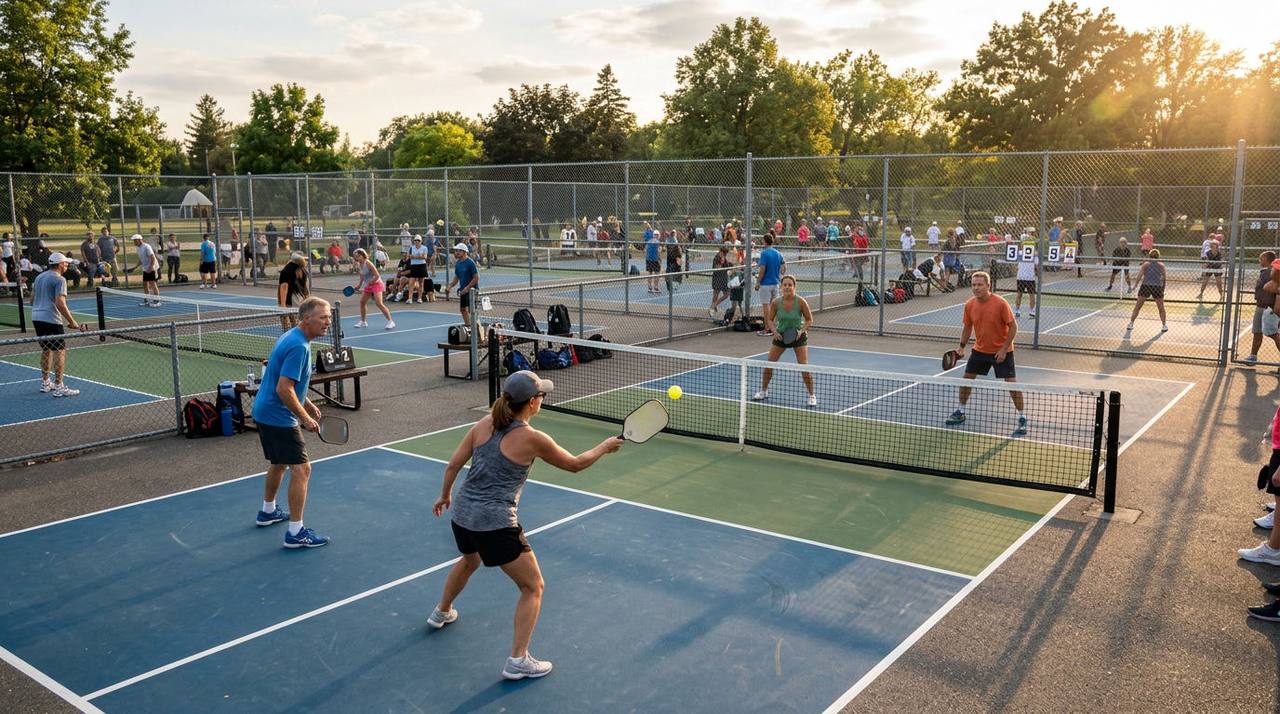
Anyone declaring the pickleball boom dead is reading the wrong line on the spreadsheet. The sport is not collapsing into a forgotten fad; it is shifting from an unsustainable novelty spike into a durable, compounding industry. The direct answer to whether pickleball is still growing is yes. Between 2024 and 2025, global participation tracked across racket industry surveys grew by 29%, adding 7.7 million active players and lifting the worldwide total to 34 million according to Global DUPR.
Trading frantic percentage surges for massive absolute volume is how an emerging sport matures. Looking strictly at the percentage slowdown misreads what is happening on court schedules, construction sites, and club waitlists. Managing facility conversions across tennis, squash, and multi-sport clubs since the early 1990s taught me that every emerging racket sport follows this exact curve before it turns profitable. Here is what that transition looks like for court operators, why the raw participant math favors long-term venues, and where capital is making costly mistakes right now.
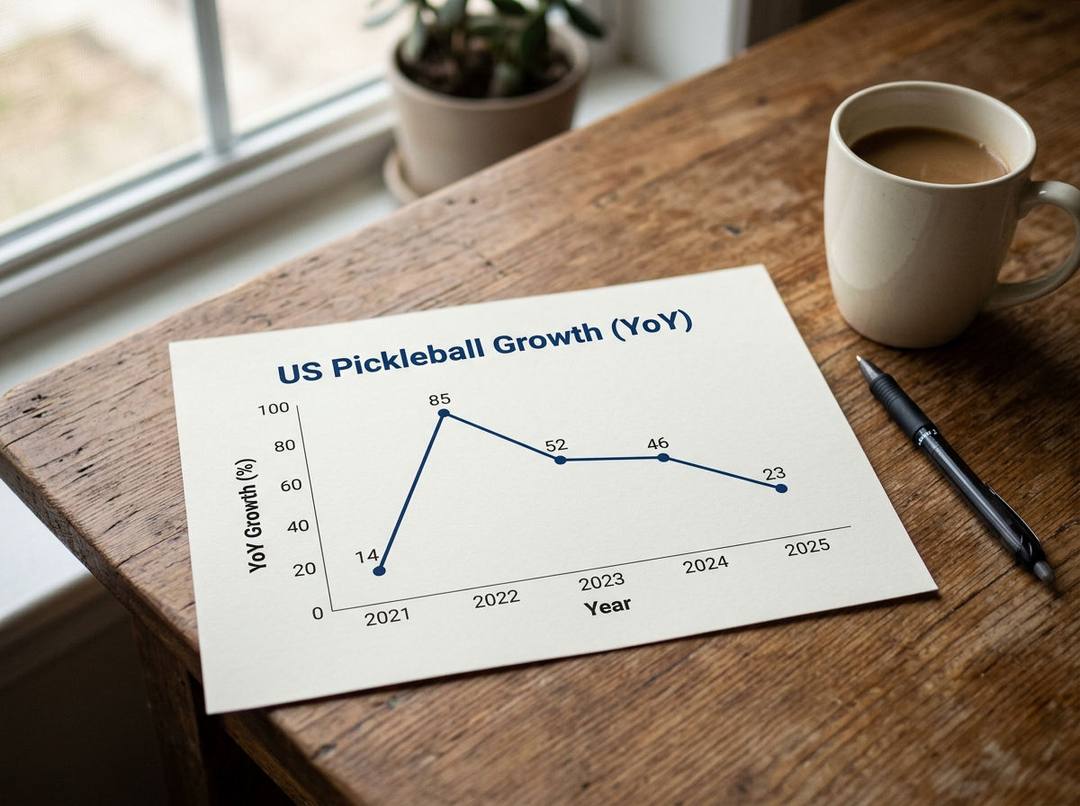
US Pickleball Growth (YoY) rises from 14 in 2021 to 23 in 2025, a 64% increase. It peaks at 85 in 2022, then eases back to 23, which suggests the growth is levelling off rather than accelerating. The biggest single move comes between 2021 and 2022.
US Pickleball Growth (YoY) rises from 14 in 2021 to 23 in 2025, a 64% increase. It peaks at 85 in 2022, then eases back to 23, which suggests the growth is levelling off rather than accelerating. The biggest single move comes between 2021 and 2022.
Is Pickleball Really Slowing Down, or Just Growing Up? — Watch on YouTube
Moving Past the Hype and Into Real Growth
The highest growth period is behind us, and that is a mathematical inevitability rather than a sign of trouble. When a sport starts from a low baseline, the initial percentages look staggering because doubling a small number does not take many bodies. Going from 5 million global players to 10 million is a 100 percent increase, representing an additional 5 million players on the books.
As the baseline expands, that percentage rate becomes much harder to replicate even while the absolute headcount accelerates. A 100 percent increase on 5 million players bringing it up to 10 million only requires a 50 percent increase in the next cycle to add the exact same volume of participants.
Looking at the global numbers from 2022, the sport posted an 84 percent increase by jumping from 6.2 million players to 11.4 million. That surge added 5.2 million players to the global tally.
International Pickleball Growth (YoY) rises from 22 in 2021 to 29 in 2025, a 32% increase. It peaks at 84% in 2022, then eases back to 29, which suggests the growth is levelling off rather than accelerating. The biggest single move comes between 2021 and 2022.
International Pickleball Growth (YoY) rises from 22 in 2021 to 29 in 2025, a 32% increase. It peaks at 84 in 2022, then eases back to 29, which suggests the growth is levelling off rather than accelerating. The biggest single move comes between 2021 and 2022.
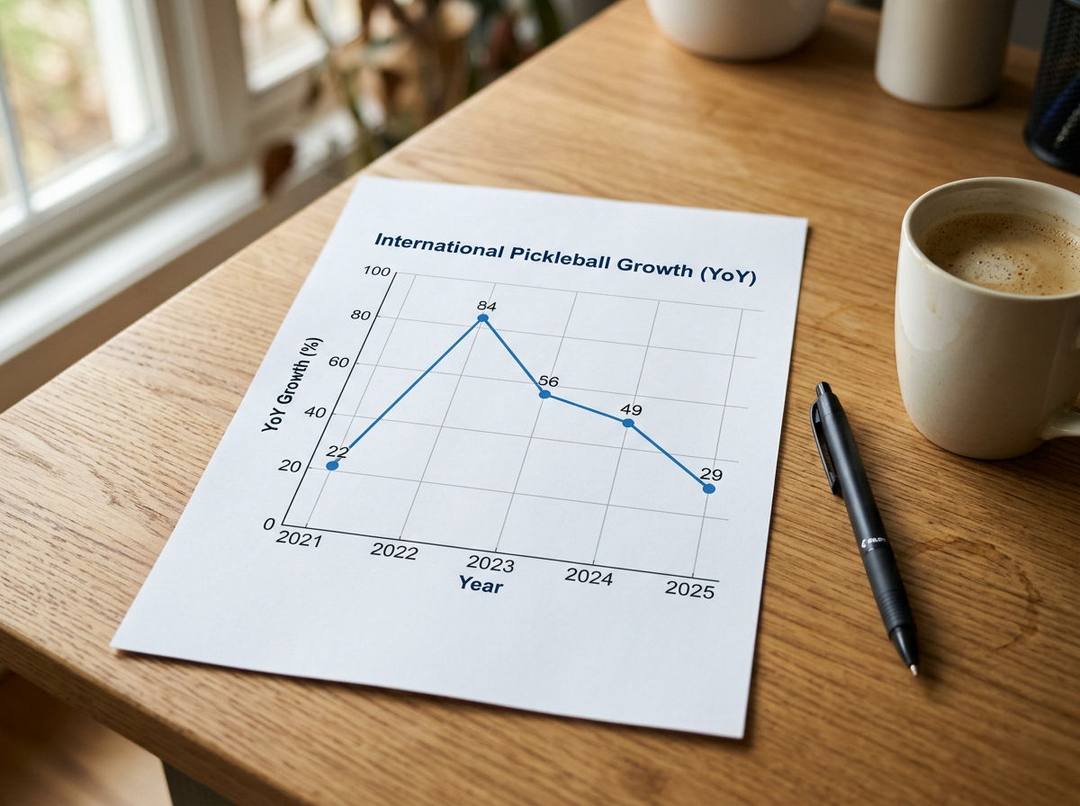
Between 2024 and 2025, that expansion rate slowed down to a 29 percent increase. On paper, market observers used to runaway venture-style curves might call that a slump, but a 29 percent gain in a mature retail or recreational market is enviable.
Generating 7.7 million new players in a 29 percent growth year means the sport added 2.5 million more real bodies than it did during its 84 percent percentage spike in 2022. That widening absolute gain is what fills morning leagues and justifies ten-year commercial leases.
"The highest growth period in percentages is probably over now because we started from a low baseline and pickleball accelerated fast. But growth in real numbers is still excellent"
Why a Maturing Market Beats the Explosive Fad
The sport is healthier right now than it was during the initial rush because the player foundation has settled into routine habits. There is now an active base of 34 million players worldwide who are committed to the game.
These players are not trying the sport on a whim and leaving their paddles in a garage. They are organizing weekly games, dragging coworkers out to the courts, talking about their games over dinner, and organizing their schedules around court availability. They care about the cardio benefits, but they stay because the social ecosystem is sticky.
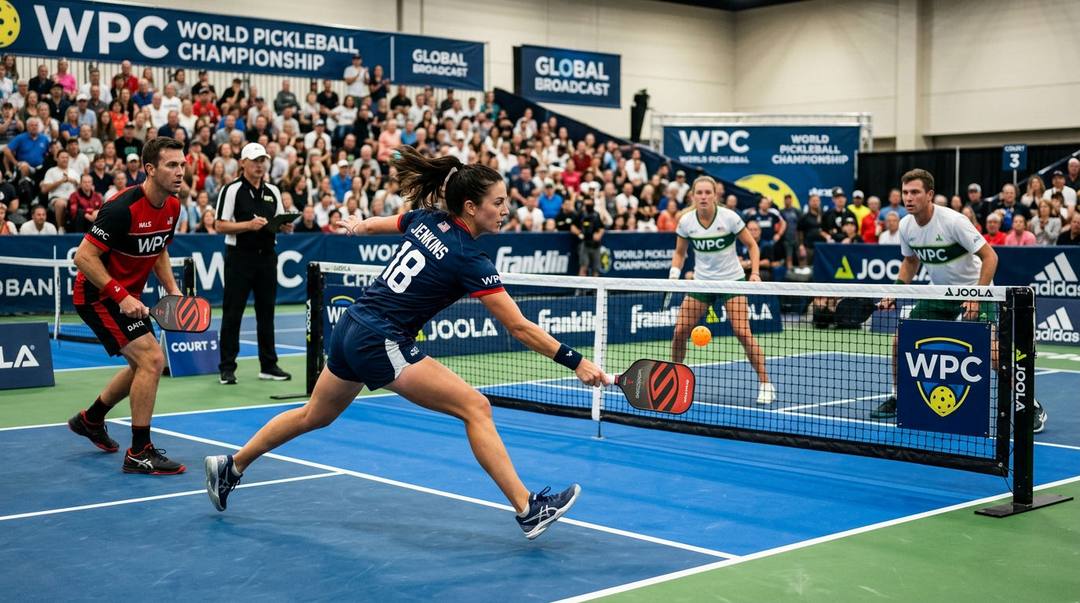
At the same time, the competitive landscape has built real distribution channels. Five years ago, professional pickleball was practically invisible to broadcast media.
Today, top tournament matches regularly draw tens of millions of viewers across online streaming platforms. That high-level exposure provides continuous, free top-of-funnel marketing for regional venues, turning passive digital viewers into local court renters.
Yet operators need to keep their perspective grounded. Pickleball is currently only the fifth most popular racket sport in the world.
It still pales in comparison to table tennis, badminton, and tennis, all of which count their global player bases in the hundreds of millions. The sport is nowhere near its global ceiling, but the window for achieving effortless break-even occupancy in unconditioned industrial flex space without structured league programming has closed.
International Expansion Outlets
Domestic market saturation concerns ignore the massive pipeline developing across international borders. Adoption is accelerating rapidly in the United Kingdom alongside Asian markets like the Philippines, Indonesia, and China, where new venues bypass the casual driveway phase and move straight into structured club play. Pickleball industry trade shows are starting to emerge and are very popular in Asia.
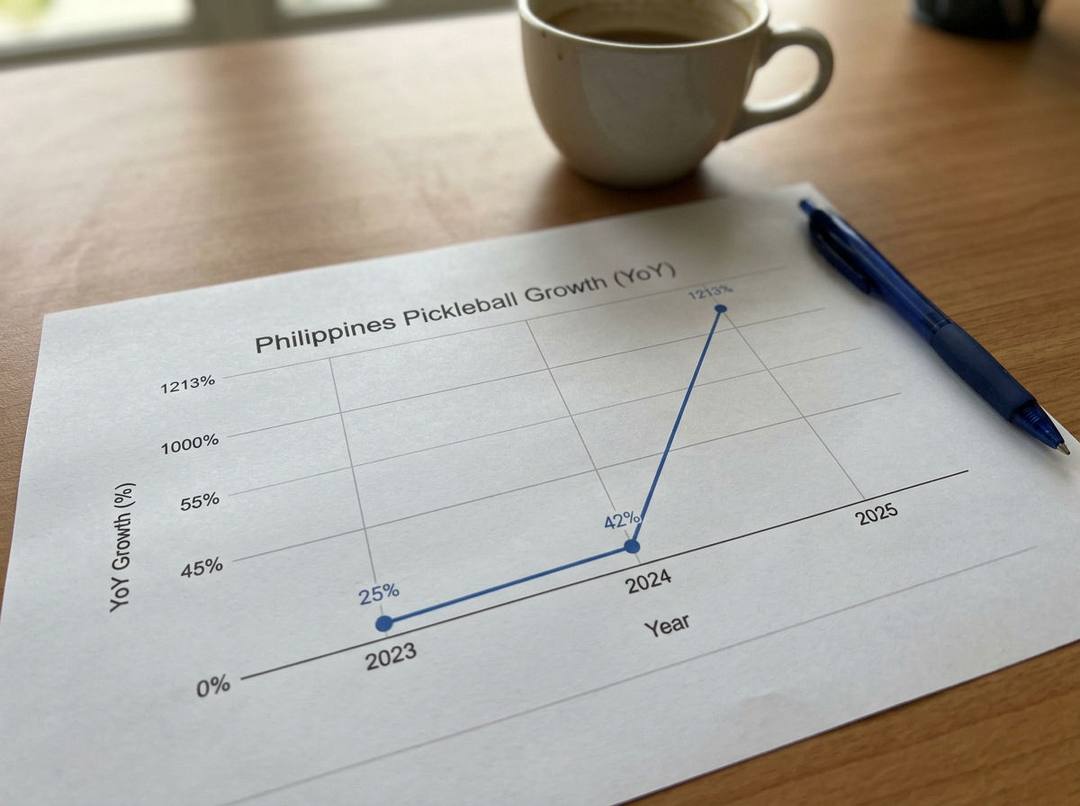
Philipines Pickleball Growth (YoY) rises from 25 in 2023 to 1213 in 2025, a 4752% increase. The biggest single move comes between 2024 and 2025.
Ireland and the UK illustrate the real commercial hurdle: pickleball is not expanding in a vacuum. But fighting padel for the exact same industrial warehouse leases and club court space. Where Irish clubs have frozen rosters and locked out casual bookings, operators who hesitate on acquiring clear-span industrial real estate are watching those footprints get secured by four-court padel franchises.
Philipines Pickleball Growth (YoY) rises from 25 in 2023 to 1213 in 2025, a 4752% increase. The biggest single move comes between 2024 and 2025.
The Cost of Cutting Corners on Court Infrastructure
One of the biggest operational blunders I see is treating pickleball as a cheap menu add-on. Taping lines over a weathered tennis court and buying $300 caster-wheel rolling nets costs under $1,500. But it yields almost zero repeat bookings once players experience dead bounces and sagging net straps. By comparison, spending $35,000 to $45,000 per court on post-tension concrete, true in-ground steel posts, and an eight-coat cushioned acrylic system generates immediate member retention and commands $40 to $60 hourly court fees.
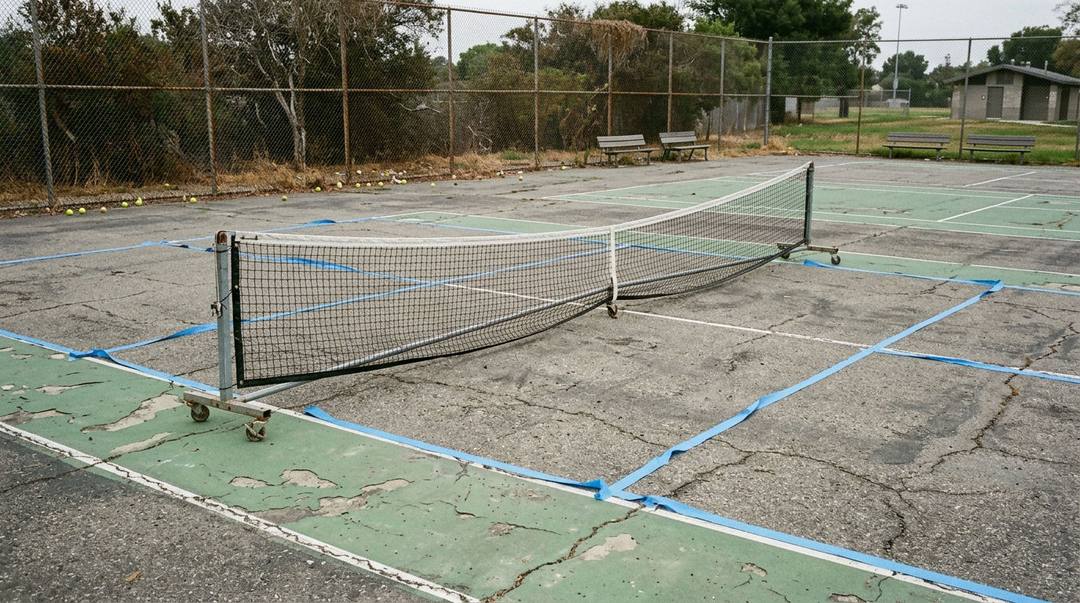
Pickleball players care about consistent surface bounce, proper net tension, and visual clarity. If you squeeze four courts onto a single tennis slab without adequate perimeter barriers, games become unplayable due to stray balls rolling through active points. Players will pack up and take their court fees to a dedicated venue every single time.
"One of the biggest mistakes I see club owners make when building pickleball courts is treating them as an afterthought on the menu, throwing down cheap, rolling nets over a tennis court with messy blended lines."
The Sustainable Future of Facility Operations
Facility operators who struggle today are usually the ones who treated the game as a low-effort cash grab with temporary gear. Sustaining healthy venue margins comes down to strict physical specifications rather than trendy lounge amenities. That requires pouring slabs with at least seven feet of baseline run-off and five feet between sidelines, anchoring heavy-gauge posts directly into subterranean concrete footings rather than trusting portable base frames, and applying textured acrylic systems that give a true ball bite instead of buffed polyurethane that turns slick under humidity. Operators who build permanent, player-focused infrastructure will easily capture the steady volume of active participants waiting for reliable court time.
My Advice If You're Building Next
The pickleball boom is not collapsing; it is shedding the frantic novelty phase and settling into a massive, permanent baseline of 34 million active players who expect proper infrastructure. Building a profitable venue today means treating the sport with the same operational seriousness as tennis or squash, moving away from temporary tape and rolling nets to invest in dedicated acrylic surfaces and proper court spacing. If you approach this market expecting easy cash from slipshod setups, the current maturation cycle will weed you out quickly. But if you put real capital into permanent, player-focused facilities, the global demand curve guarantees you will have more players waiting for court time than you can handle.
FAQ
Is pickleball court construction cheaper than building tennis courts?
A regulation 60-by-120-foot tennis slab of 7,200 square feet accommodates up to four pickleball courts, typically costing $40,000 to $90,000 in total. That footprint density represents roughly a 60% cap-ex reduction per playing surface compared to building dedicated tennis infrastructure.
How long does a standard acrylic pickleball court surface last before needing resurfacing?
A professionally installed acrylic pickleball surface on a well-drained post-tension concrete base typically lasts four to six years before showing enough wear to require resurfacing.