Issue 02 · November 2026 · All / Operations, Member Experience
Racket Club Revenue Ideas to Grow Without Spending
Discover free racket club revenue ideas to grow turnover across tennis, padel, and pickleball venues using smart booking flows and secondary amenities.
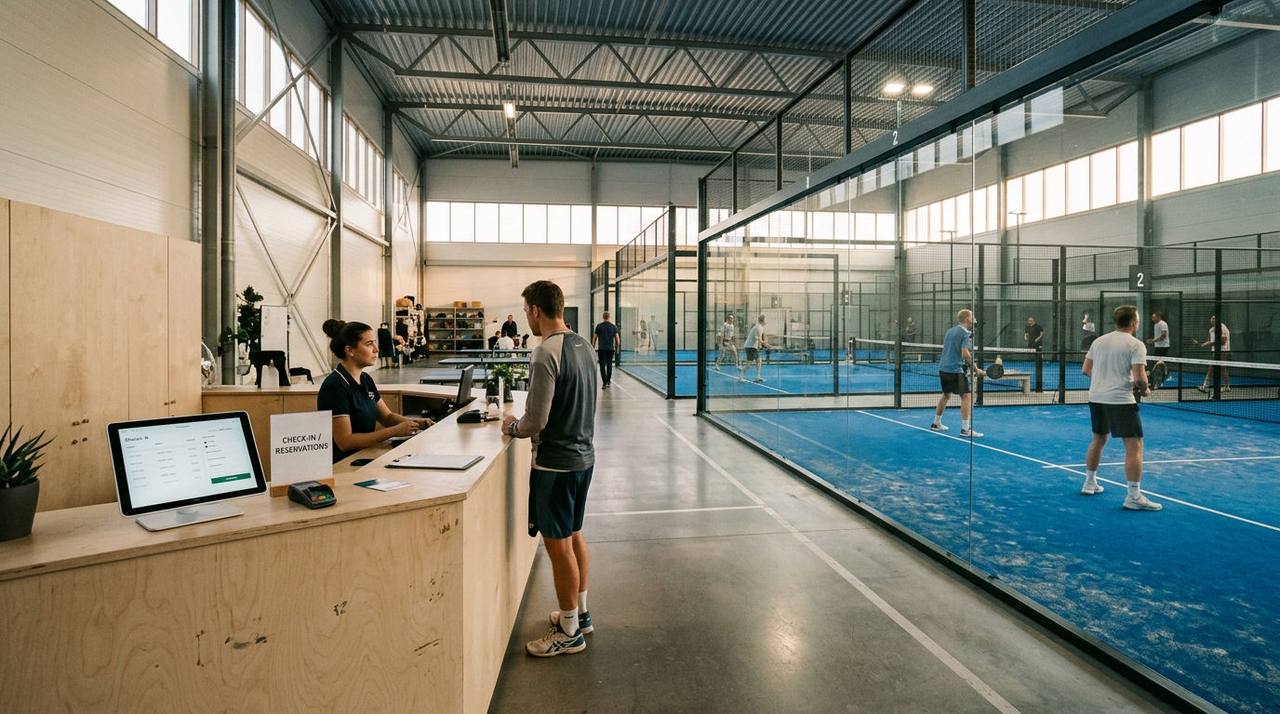
Growing racket club revenue without spending a single penny starts with how players interact with your schedule. I started playing racket sports decades ago on cracked public courts and still spend several days a week inside tennis, padel, and pickleball venues often watching managers fighting to keep their lights on. I see daily how venue software dictates whether members ever notice your secondary offerings.
When square footage is tight, squeezing more margin from existing footprints requires rethinking how members interact with your venue every day. Tennis, padel, pickleball, and table tennis facilities often sit on untapped earning power simply because secondary services stay completely invisible. Eliminating transactional friction turns basic court reservations into steady multi-offering sales without spending a single penny on marketing campaigns.
Comparison of Zero-Spend Revenue Methods
The booking engine powering your venue often determines whether members actually see and purchase your secondary offerings. Off-the-shelf marketplace directories like Playtomic or Matchi give you external player reach. But they rarely give you the custom promotional real estate needed to push stringing, ball purchases, or private coaching. And when they do, it is hidden away in hard to find corners of the booking system.
| Tactic | Capital Outlay | Setup Timeline | Margin Potential | Primary Catch |
|---|---|---|---|---|
| Racket Stringing Add-On | €0 | Immediate | Medium | Turnaround time consistency |
| Pro-Shop Add-ons | €0 | Immediate | Medium | Front-desk fulfillment discipline |
| Ball Recycling | €0 | 1-2 Weeks | Low | Modest earnings ceiling |
| Leagues & Ladders | €0 | Immediate | High | Scorekeeping abandonment |
| Corporate Packages | €0 | 2- 4 weeks | Medium | Daytime staff availability |
| Beginner Courses | €0 | 1 Week | Medium | Channel disintermediation |
| Food & Beverage | €0 | 2-4 weeks | Medium | Short shelf-life spoilage |
| Studio Reactivation | €0 | 1 Week | Medium | Maintenance discipline |
How I Chose These Revenue Strategies
High-performing clubs generate extra income by removing every obstacle between a player's initial interest and their final payment. To grow revenue without spending money, place every facility, event, and retail add-on directly inside the online booking flow with one-click checkout instead of hiding offerings behind notice boards or phone calls to the front desk. I've played racket sports all of my life in clubs old and new across three decades, seeing firsthand how wasted spaces and neglected booking workflows sink venue revenue.
Industry consensus suggests that adding turnover requires costly renovations, or splashy commercial partnerships. That advice is backwards, and my evaluations focus strictly on zero-capital methods that monetize unused downtime and capture retail margin at the exact second a court reservation is confirmed. Although having great club software will help you implement and market new innovations, if its not an option available to you, all of these ideas can still be completed with minimal cost. I have personally seen clubs make these changes and the results have often been excellent.
1. Racket Stringing with Upgrades and Express Service
Racket stringing delivers dependable, zero-capital profit when structured with clear turnaround tiers and scheduled through your primary system. Players snap strings constantly, yet many clubs outsource the work informally or leave stringing requests scribbled on paper notebooks behind the counter.
You can run an efficient stringing service by offering a standard 72-hour turnaround time for racket stringing, charging a base fee of €15 for labor alongside options for upgraded strings and a €5 replacement grip. Displaying those upgrade tiers directly inside your club reservation portal allows players to drop off their frame, select their preferred tension, choose an upgraded string, and add a fresh overgrip in seconds. Even the clubs I play at are missing this one offering just new strings, and nothing else. It's a strong swing and miss in my book.
This service suits any venue with regular competitive match play. The catch is managing turnaround consistency during peak tournament weekends.
2. Pro-Shop Add-ons at Check Out
Capturing retail purchases at the point of court checkout generates immediate income without adding marketing overhead. When a player books a court, their purchase intent peaks. Prompting them to add a fresh can of balls, a three-pack of overgrips, a demo racket rental, or ball machine hire right on the reservation confirmation screen converts routine bookings into larger transactions. How often have you turned up to play a match with poor quality balls, but found yourself too far from the pro shop to go back and buy a fresh can?
Front-desk merchandising often goes wrong creating extra queues for court bookings or check in, while someone decides which colour of cap they want. I constantly spot pro shops wasting prime counter real estate on items that have nothing to do with racket sports. For example, just last week while visiting a local tennis and padel club, I noticed behind the desk they have kids' toys for sale. My first instinct was that these items are just going to gather dust and take up crucial space for something that would be more appealing to their player base.
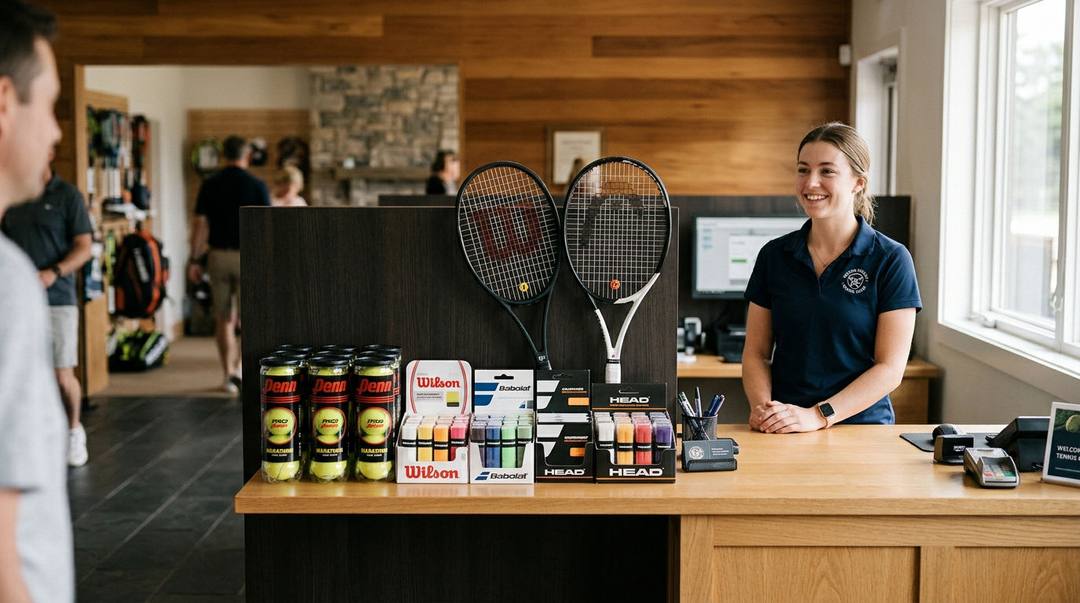
Keep inventory focused entirely on immediate court necessities: fresh tournament-grade balls, replacement grips, and rental gear. When a member reserves a court online, the system should ask if they need a fresh can waiting for them at check-in.
This setup works best for high-traffic venues where front-desk staff have clear visibility over incoming court sheets. The trade-off is fulfillment discipline. If an online customer purchases a can of balls and a fresh grip during checkout, the front-desk team must have those items bagged on the counter before the player steps through the front door.
3. Recycle Your Old Balls
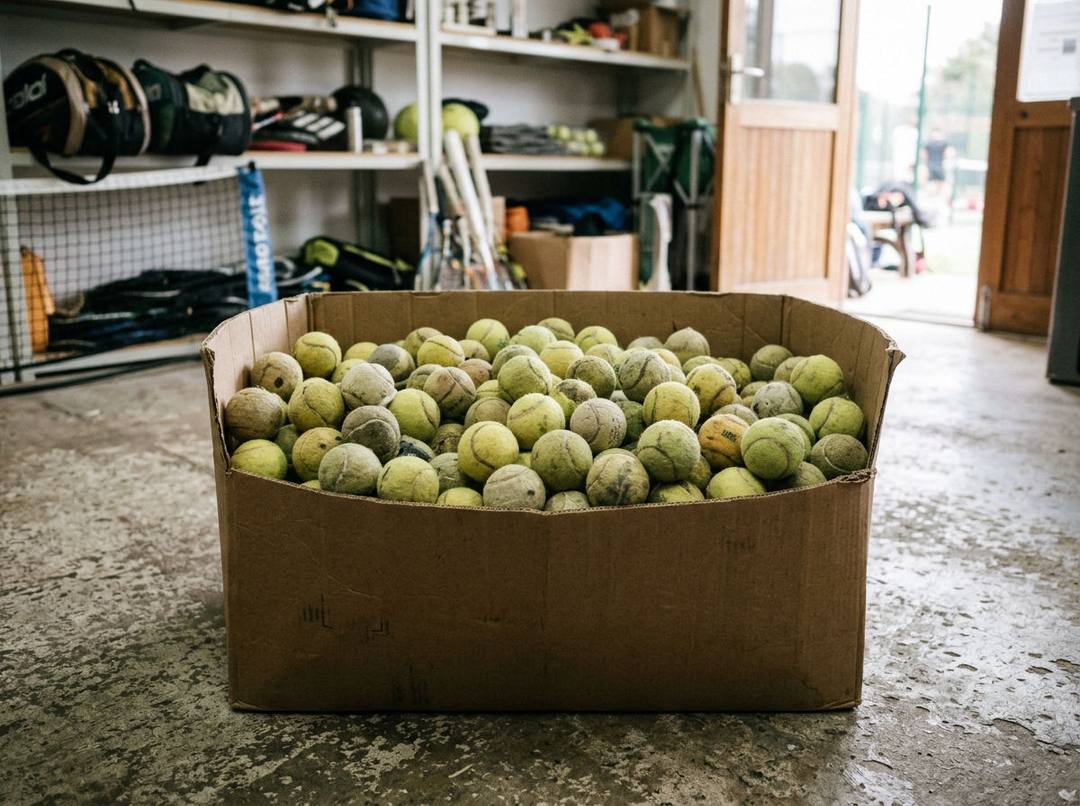
Recycling spent tennis and padel balls turns an ongoing disposal expense into a recurring, zero-effort income stream. Clubs discard hundreds of dead balls every month from coaching baskets, league matches, and court cleanups. Leaving them in back storage rooms or tossing them into general waste bins throws away residual value while cluttering your facility.
Commercial recycling firms now collect pressurized balls directly from venues, with programs paying around €0.05 to €0.10 per usable ball or offering equivalent trade credits for fresh coaching buckets. Partnering with these collection programs costs nothing, keeps rubber out of landfills, and generates a modest revenue stream that offsets annual ball purchases.
This program suits busy facilities that run daily squad coaching, academy training, and active social mixers where balls lose pressure within hours. Where it stumbles: that earning potential remains inherently modest, as ball recycling will never cover major utility bills.
4. Club Leagues, Tournaments, Ladders, and Match Opportunities
Organized internal competitions represent the single most profitable zero-spend strategy available to a racket venue. Ensuring that you have plenty of club leagues, tournaments, ladders, and match opportunities for your players, all easy to enter from your own booking system, generates more games, more relationships, and happier members. When players have a competitive reason to step on court, court occupancy during off-peak windows climbs automatically.
Internal tournaments and ongoing box leagues drive secondary spending across every department. Players competing in a weekend ladder match buy new grips, purchase fresh cans of balls, book practice sessions on ball machines, and stay for food and drinks afterwards. By hosting sign-ups, schedule publishing, and score submissions directly inside your venue app, you remove the administrative headache of running events via manual spreadsheets or messy group chats.
This method benefits any venue with underutilized off-peak hours, especially padel and pickleball clubs where social competition drives player retention. The drawback: that poorly managed ladders stall quickly. If players cannot easily record scores, view updated division tables, or challenge peers through their phones, participation fizzles out within six weeks.
5. Off-Peak Corporate Packages
Weekday mornings leave courts sitting empty while local office parks buzz with professionals looking for team-building activities. Contacting nearby businesses to offer structured corporate paddle or tennis clinics fills those dead hours without spending a dollar on advertising.
Package these sessions as mid-week wellness perks that require zero setup from your team beyond reserving two or three courts and assigning a coach. Local companies jump at clean, active corporate events that get their staff away from desks.
This tactic suits urban clubs surrounded by commercial real estate. The trade-off: coordinating staff availability for daytime hours when front-desk rosters run lean.
6. Beginner Courses for Member Acquisition
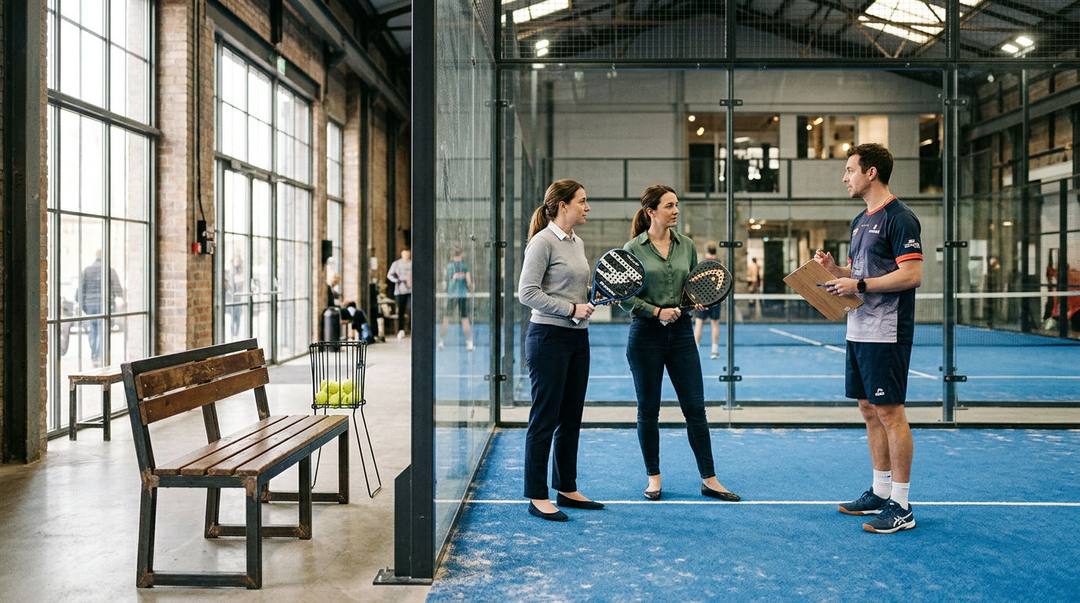
Four- to six-week beginner courses act as powerful entry funnels for players who want structured instruction before committing to full memberships. Running these courses inside your own booking portal ensures you capture participant data directly rather than handing leads straight to third-party marketplaces like Playtomic or Mindbody.
By keeping registration in-house, you own the customer relationship from day one and can pitch full club membership during the final week of classes. New players get a clear pathway into the sport, and your club gains a reliable feeder system for annual dues.
This program benefits facilities looking to expand their active player base. The risk is letting external booking platforms intermediate your beginner pipeline, which hands your hard-earned customer leads straight to competing clubs.
7. Healthier Food and Drink Menus
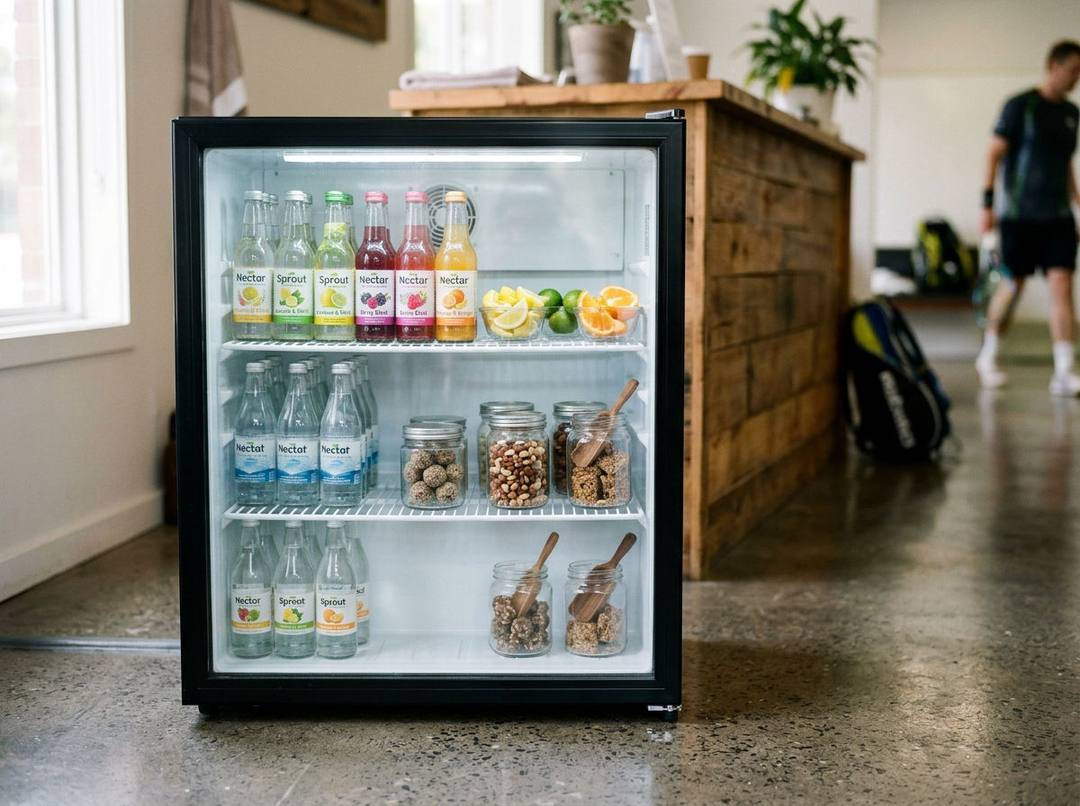
Post-match nutrition does not require an expensive commercial kitchen overhaul or a team of professional chefs. Swapping heavy, sugary sodas and fried snacks for fresh juices, fruit-infused sparkling waters, and protein-packed grab-and-go options captures immediate sales from players walking straight off the court.
Healthy cold drink options work wonders in warmer climates, giving customers refreshing alternatives loaded with nutrients rather than refined sugar. Adding a trendy sprig of rosemary and a paper straw gives a basic beverage a premium feel and price point that players happily pay for.
This upgrade fits clubs with basic refrigeration units and zero kitchen space. The trade-off is managing short shelf-life inventory to prevent fresh produce spoilage.
8. Studio and Gym Reactivation
Unused studio spaces and dusty fitness corners represent wasted square footage that can easily generate hourly income. Clearing out stored junk, giving the walls a fresh coat of paint, and adding those neglected areas to your club app turns dead storage into functional zones for yoga, stretching, or solo strength work.
Organizing recurring classes or letting members book the studio space independently via your booking system drives use upward. When members see a clean, well-lit studio available on their app, they book it.
This strategy works for any facility with auxiliary rooms that drifted into storage duty. The challenge is maintaining discipline so the room does not slowly revert to storing spare nets and broken chairs.
What to Do Today
Any club owner should start by cleaning up their neglected spaces this Monday morning. Cleaning up neglected corners costs nothing and immediately lifts the venue's standard. Once the facility looks sharp, configure your booking system so every retail necessity, tournament ladder, and court add-on sits right inside the reservation flow.
FAQ
How difficult is it to migrate my club's booking system to support multi-offering checkout?
Exporting member profiles and court schedules to a customizable platform takes a few days. The operational setup requires entering your retail items, defining stringing turnarounds, and mapping checkout prompts directly to court reservation confirmation screens.
Won't prompting players for add-ons during court booking cause booking abandonment?
Non-intrusive checkbox add-ons for essentials like balls or grips speed up the player's day by eliminating front-desk queues. As long as the checkout remains a clean one-click process, players appreciate the convenience.