Issue 02 · November 2026 · Padel, Tennis / Operations, Member Experience
Five Ideas for a More Profitable Tennis Club
Cut payroll waste and fill empty courts with five operational shifts for a profitable tennis club, from native booking tools to hybrid access.
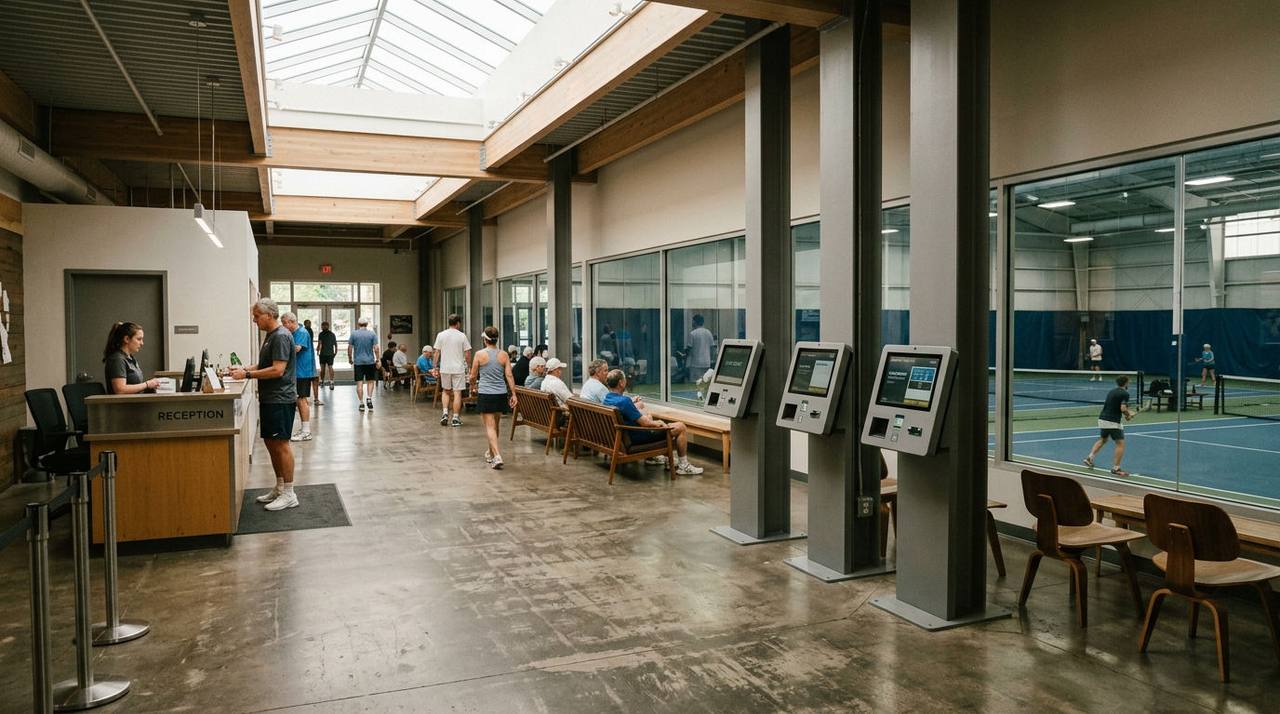
I have played racket sports for over thirty years, and I still walk into traditional clubs where the front desk sits in total gridlock. Staff flip through paper binders to resolve bookings while players wait in line to hand over cash for light tokens. Running a profitable tennis club starts with automating your booking setup on a dedicated rackets platform, cutting back on administrative payroll while funnelling players into wider club amenities.
In a busy racquets venue, healthy net profit margins can range between 30% and 50% or more. But the moment court use falters, or if a club is too small to benefit from economies of scale, those margins quickly slide down to sub 10%.
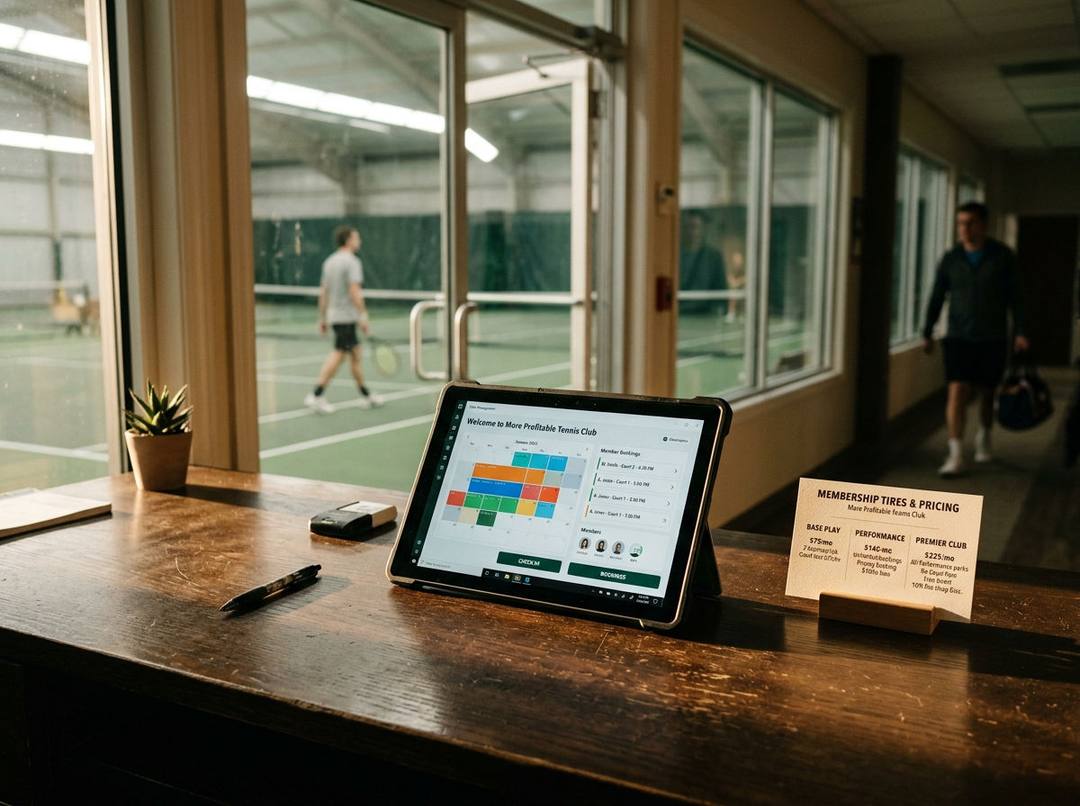
Payroll from coaches and front-desk staff normally claims 25% to 50% of your total revenue, and that percentage climbs significantly in smaller operations where staff costs cannot be spread across dozens of courts. Utilities eat another 10% to 20%, driven heavily by the power demands of court lighting and for indoor courts in the wrong location, continuous humidity control can be destructive on the bottom line. Protecting that margin means viewing courts not as the final cash register. But as the primary engine that brings players through the doors to spend across the rest of the facility. Here are 5 ideas to
1. Automate Bookings for the Fastest Financial Return
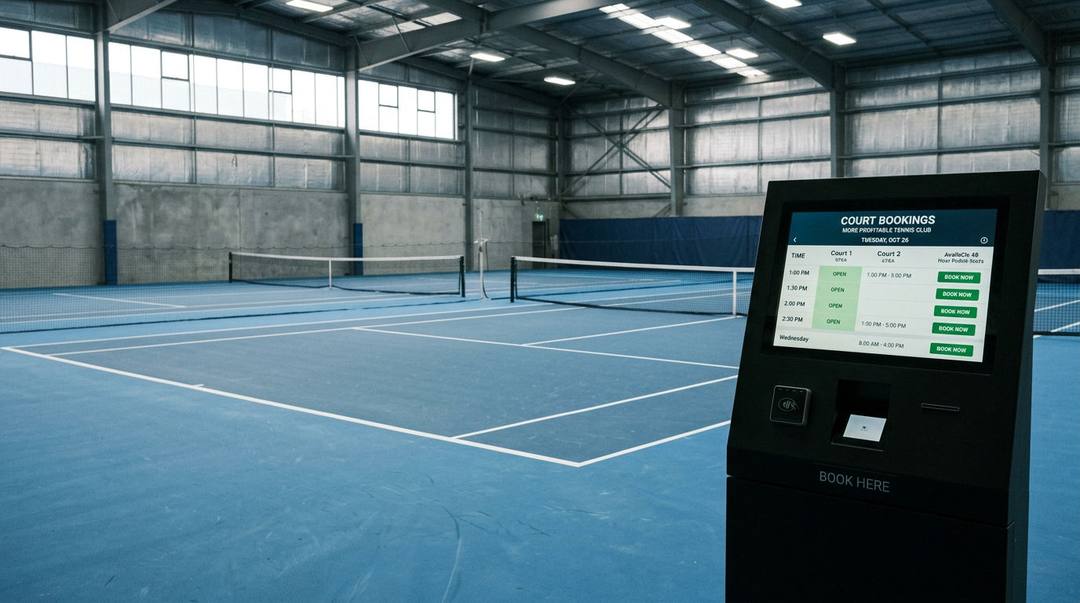
Of the five shifts an owner can make, automating your reservation system delivers the biggest financial return. Every phone call, email or message your staff takes to process a boking is payroll walking straight out the door. Self-service scheduling passes that chore to players and turns your booking portal into an around-the-clock sales engine.
A capable platform also handles promotional heavy lifting. When a member logs on to reserve a court, the software should put coaching clinics, open mixers, and all available facilities right in front of them. It should also serve as your best marketing tool. If its just handling court reservations, it's simply not good enough. Few rackets club booking systems actually handle this task well. We have reviewed two, which we feel are the best right now.
For smaller clubs, CourtReserve offers an entry tier starting at $99 per month, scaling to its Launch tier at $199 per month ($159 billed annually) for up to eight courts. Unfortunately those lower tiers miss out on many of the benefits seen in the $549 per month tier for thirty-two courts. While most clubs won't have that many courts, its still the only tier worth entertaining. Its older software, but its solid at the higher tiers with a lot of the features a club will benfit from.
For mid-sized and larger venues, Six Love runs at €99 per month on Basic or €199 per month. But those tiers are really only for Pay and Play Clubs as they incorporate micro-transaction fees. Membership clubs start at a more expensive $599 per month for fee-free processing. Despite a higher cost, it delivers on everything I think is important to grow a club. A true white-label member experience that unites coaching calendars, guest passes, and all the clubs facilities into one branded portal. The customisation is almost limitless, and most importantly it ensure all of their facilities are available and advertised to members in one place.
2. Switch to a Hybrid Membership Setup
Operators trap themselves in a rigid choice between private clubs and municipal pay-and-play. I recommend running a hybrid model. Most setups haemorrhage money between 11:00 and 16:00 on weekdays while fixed overhead runs unchecked. Empty midday courts generate zero revenue.
Under the hybrid setup, monthly dues give registered members free court bookings, with inventory opened up to public non-members paying per hour. To maintain member priority, give subscribers an advanced reservation window while restricting public visitors a much smaller booking opportunity. You protect regular members while capturing outside cash while directly advertising your facilities to even more players.
Keep those guest bookings on your own platform instead of handing them to third-party marketplaces. Aggregators like Playtomic charge a high commission on both the club and the player, climbing up to 20% on open matches while listing your courts alongside cheaper competitors. Across Spain, I watched clubs abandon shared platforms because they bled customer contact data and court control.
In my tracking across Scandinavia, the pattern was clear:
"Back in Sweden, when the padel and tennis boom cooled down, marketplace apps drove a destructive race to the bottom on court fees. The clubs that stayed off those platforms fared significantly better in our tracking, maintaining both stable court use and their standard pricing."
3. Program Regular Social Events to Stop Member Churn
Member churn eats club profits from the inside out, and operators almost always diagnose it incorrectly. Management often assumes players drop out over an annual price rise, but cost is rarely the primary trigger. Members leave when they have nobody to hit with. Loneliness kills memberships faster than fees.
Organized box leagues, weekend mixers, ladder tournaments, and beginner round-robins solve this by forging the playing partnerships that keep dues coming in. The onboarding period is critical here. When someone signs up, get them into a structured welcome clinic within their first fourteen days. If a new member fails to establish a playing circle in those opening two weeks, your chances of retaining them past month six crater.
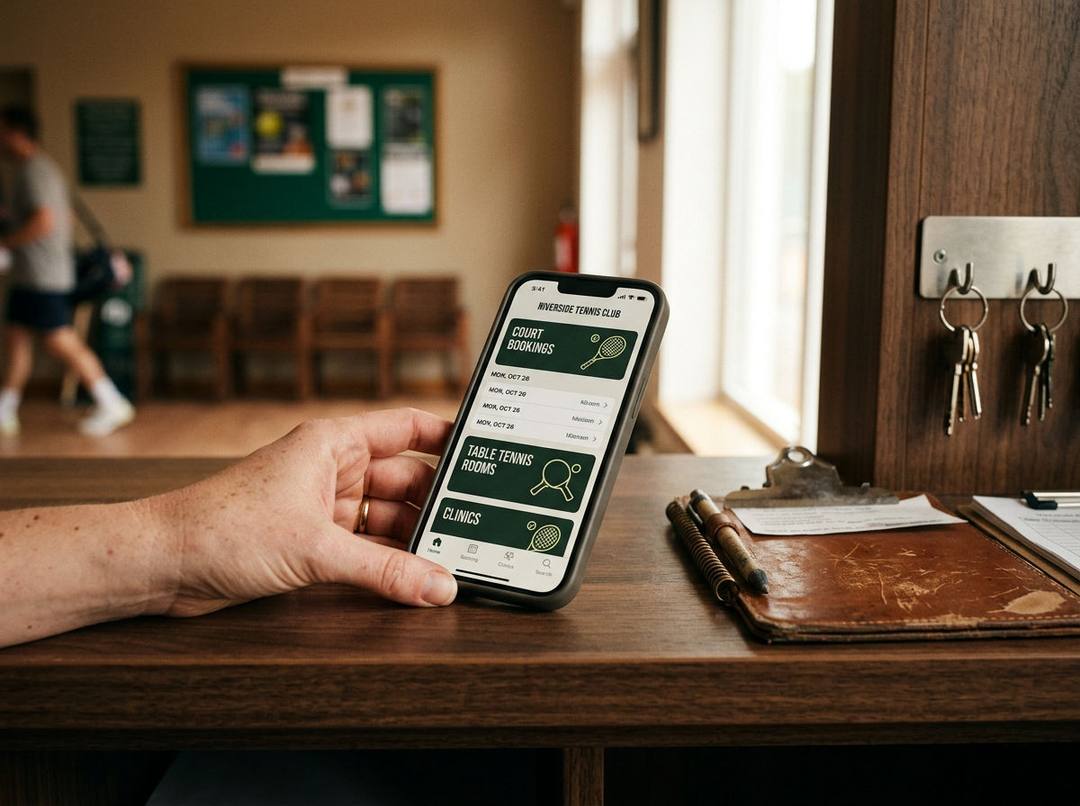
Do not rely on paper flyers tacked to a clubhouse corkboard that players walk past without reading. Put event rosters, ticket payments, and live standby waitlists directly inside your member app. When players see that a Friday night mixed doubles mixer has only three slots open, they sign up on the spot, filling your courts and sending dozens of thirsty players into the bar afterward.
4. Maintain Secondary Spaces with the Same Rigour as Courts
Courts bring players through the front gates, but secondary amenities generate the profit margins that make the club commercially resilient. Hourly court fees cover ground leases and power bills; private locker rentals, studio classes, and food sales generate genuine surplus. Neglected amenities poison player loyalty and miss out on potential revenue.
Secondary earnings only materialize if auxiliary spaces receive the exact same care as your court surfaces. I saw what happens when club operators treat physical facilities as an afterthought:
"I've personally been to many clubs where the gym ends up a storage space, the showers start to smell a little humid with mold or the table tennis table is shoved up against the corner."
Nobody spends money in a space that feels abandoned. If you add a facility, support it properly. Keep changing rooms spotless, bring in certified strength coaches for your fitness studio, and offer healthy meals alongside post-match pints. When secondary facilities look and feel premium, players stop treating the venue as a place to play for sixty minutes and start using it as an afternoon hub.
5. Put Management on the Clubhouse Floor
Even the best automated software stack and immaculate clay courts will underperform if club management remains cloistered behind an office desk. When an owner or general manager is invisible, the club becomes an impersonal transaction, and members feel zero hesitation about walking away to a newer facility across town. Presence builds retention.
Spend prime evening hours out in the lounge, drop in on weekend junior squads, and talk with players as they come off the courts. When leadership is a regular, approachable presence, members will tell you about loose net cables, flickering court lights, or shower pressure problems long before those minor annoyances boil over into membership resignations.
Executing these shifts requires a deliberate working cadence rather than a messy overnight overhaul. Start by auditing court schedules to spot dead midday hours and logging how much administrative payroll disappears into front-desk phone calls. Next, migrate reservations, coaching calendars, and auxiliary spaces onto a single native booking tool, then launch hybrid access to let non-members buy vacant daytime slots under strict 48-hour windows while paying members retain two-week priority. From there, refurbish changing rooms, gyms, and dining areas to drive hospitality revenue, and pull management out of back offices so leadership stays visible on the clubhouse floor every evening.
The Operational Verdict
Court fees alone cannot support escalating utility tariffs and staff payroll. Building a more profitable tennis club can be achieved by eliminating administrative drag with native booking tools, adopting hybrid access to monetise quiet midday courts, keeping secondary amenities attractive, and building an active, connected player community. Ditch third-party aggregators that commoditise your court time, get out onto the clubhouse floor, and run your club as a complete hospitality and sports business.
FAQ
Which single operational shift improves club profitability fastest?
Automating your booking workflow delivers the fastest return by eliminating front-desk admin payroll and phone bottlenecks. It also increases non-court revenue by placing clinics, lesson slots, and social events directly into a self-service mobile app.
How does a hybrid membership setup avoid angering long-time members?
A hybrid model reserves a wide 14-day booking window for dues-paying members while limiting outside public players to 48 hours. This protects peak evening court times for loyal subscribers while letting casual players pay premium hourly rates for empty midday slots.
Why should independent racquets clubs avoid marketplace booking aggregators?
Marketplace aggregators take heavy transaction fees and display rival venues alongside your open courts. Keeping reservations on your own native software protects your pricing power, preserves your customer contact data, and prevents local price-slashing wars.