Issue 02 · November 2026 · Pickleball / Construction, Operations
Bay Club Washington Acquisition: Inside the Northwest Playbook
The Bay Club Washington acquisition of Tennis Centre Sand Point
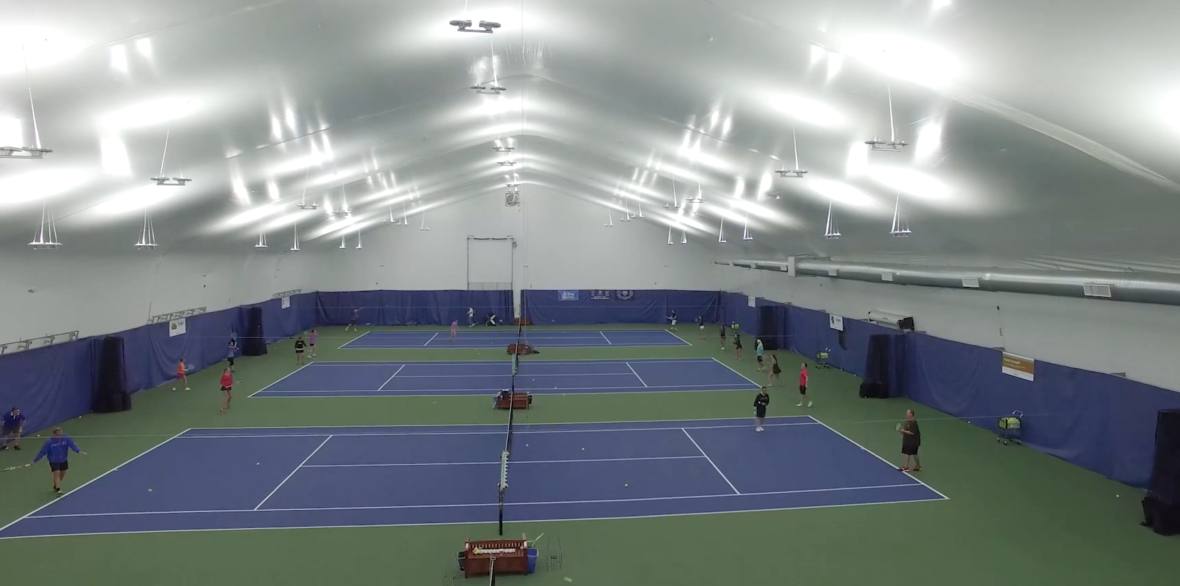
The Bay Club Washington acquisition of Tennis Center Sand Point signals an aggressive land grab across the Pacific Northwest racket sports market. While Bay Club spent $65 million to buy the real estate under its San Francisco flagship, deploying private equity capital into Northeast Seattle shows that regional dominance requires owning scarce indoor court capacity rather than leasing standard fitness boxes.
Key takeaways
- The purchase of Tennis Center Sand Point marks Bay Club's 12th location in Washington, backed by private equity giant KKR.
- Expanding across the Pacific Northwest begins with a brutal mathematical check on indoor court ratios against local affluent households.
- To understand how the Sand Point deal fits into the Pacific Northwest landscape, we have to look at the asset alongside the earlier cornerstones of Bay Club's regional portfolio.
- The most common operational mistake buyers make is purchasing a venue based entirely on historical numbers without looking at where the local market is actually heading.
- Regional club consolidation can bring many benefits due to the large investment increase into a club, whether that be a generic fitness club or a rackets club such as padel, pickleball, or tennis.
Private equity sponsorship accelerates deployment timelines, yet physical operations live or die at the front desk. Buying hard assets in land-constrained metro areas only succeeds when the operator controls customer booking data directly instead of inheriting transient users from third-party aggregators.
Analyzing the Bay Club Washington Acquisition
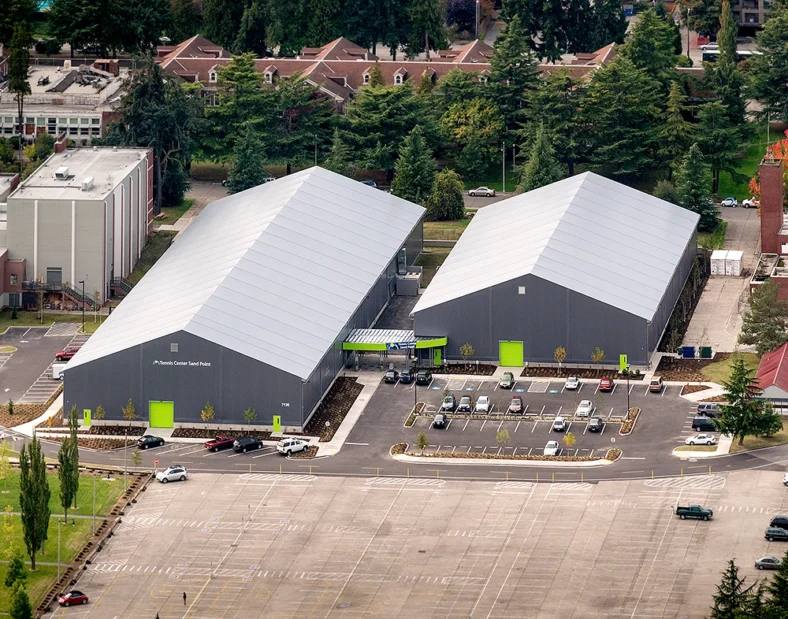
The purchase of Tennis Center Sand Point marks Bay Club's 12th location in Washington, backed by private equity giant KKR. The Northeast Seattle facility brings 10 indoor tennis courts providing year-round access, complete with training technology, competitive league infrastructure, a cafe, and a pro shop.
The move aligns directly with shifting recreational habits across the country. Garmin user logging data showed racket sports activity climbing 67% year-over-year in 2025, outpacing growth in both Pilates and high-intensity interval training. While tracker metrics reflect early adopters rather than entire populations, they confirm heightened court utilization among affluent demographics.
That growth explains why corporate capital is hunting indoor court real estate. Bay Club kicked off its Washington expansion in late 2023 by acquiring PRO Club's Seattle and Bellevue assets, followed by Harbor Square Athletic Club in Edmonds, three 425 Fitness sites, and Arena Sports. At the same time, the group executed a $65 million acquisition of the city block housing its San Francisco flagship club, alongside a $25 million transformation of Manhattan Country Club in Southern California.
The Regional Expansion Playbook for West Coast Club Operators
Expanding across the Pacific Northwest begins with a brutal mathematical check on indoor court ratios against local affluent households. Across multiple acquisitions, teams look closely at player numbers and available courts to spot underserved facilities where demand clearly outstrips supply. Beyond court ratios, the evaluation hinges on local population density, demographic affluence, and the physical location of the venue itself. Adequate parking, strong passing traffic, and clear visibility for exterior signage all matter before making a move. In denser markets like Seattle, building a new indoor racket footprint from scratch is almost impossible due to zoning restrictions, permitting delays, and industrial land costs.
Evaluating Tennis Center Sand Point Against Regional Rivals
To understand how the Sand Point deal fits into the Pacific Northwest landscape, we have to look at the asset alongside the earlier cornerstones of Bay Club's regional portfolio.
| Facility / Asset | Estimated Deal Value | Primary Asset Class | Standout Operational Feature | Key Operational Vulnerability |
|---|---|---|---|---|
| Tennis Center Sand Point | $65,000,000 | Indoor Tennis | 10 indoor courts for year-round access | Vulnerability to third-party booking app reliance |
| PRO Club Seattle | ~$10,000,000 | Luxury Fitness and Rackets | Established foundational footprint in Seattle | High operational overhead |
| Harbor Square Athletic Club | ~$8,000,000 | Community Athletic Facility | Strong local community integration in Edmonds | Limited luxury amenity scaling |
The comparison illustrates three distinct tactical steps. PRO Club gave the operator foundational enterprise scale in the region, while Harbor Square delivered stable suburban community membership. Sand Point secures specialized court volume that is virtually impossible to replicate under modern Seattle construction costs.
The Hidden Operational Risks in Club Buyouts
The most common operational mistake buyers make is purchasing a venue based entirely on historical numbers without looking at where the local market is actually heading. Buyers review trailing twelve-month revenue and assume court fees will stay flat, missing how customers actually interact with the booking desk.
You have to audit the data and check how many new facilities have opened nearby, but more importantly, examine how the club actually attracts players. If the existing player base relies on third-party marketplace aggregators like PlayByPoint or CourtReserve rather than the club's own proprietary membership ledger, those customers drift away the moment a rival venue opens closer to home.
Before acquiring any new club, ensure the operator has a clear roadmap to migrate users onto proprietary software like Bay Club Connect rather than leaving them on marketplace applications. When you buy a club, you are buying the member database. If those players book through an unintegrated portal, they remain platform loyalists rather than club members. When you buy a club, you are also buying the members, and if those members are coming via a third-party app, they are technically not members to acquire at all, leaving you with little more than real estate.
Identity Loss and the Downsides of Regional Consolidation
Regional club consolidation can bring many benefits due to the large investment increase into a club, whether that be a generic fitness club or a rackets club such as padel, pickleball, or tennis. Where I see the downside, though, is that it strips some of the club's identity away, especially if it was previously an owner-operator facility where the hands-on approach gets lessened as layers of management are brought in.
When operators handle a buyout, they typically integrate the new systems slowly, introducing existing members gradually to how things will operate in the future. Long-tenured members who have built their weekly routines around a specific facility often greet private equity ownership with suspicion. So it's very important not to change too much too quickly.
Buyer's Guide & Final Verdict
Here is how the trade-offs balance out on the Sand Point buyout:
- Pros: Locks down 10 irreplaceable indoor courts in an affluent metro zone, secures established competitive league revenue, and deepens KKR-backed regional pricing power.
- Cons: High capital acquisition expenditure, member friction during system consolidation, and ongoing vulnerability if player booking data remains tied to third-party apps.
The Sand Point transaction earns a solid 4 out of 5 rating as an expansion play. Securing 10 indoor courts gives Bay Club regional court dominance in a high-income Seattle enclave where replacing that physical infrastructure is cost-prohibitive.
The model suits multi-unit hospitality operators with the balance sheet to absorb transition friction and maintain proprietary booking engines. It does not suit independent investors seeking turn-key operations without deep capital reserves, because corporate standardisation inevitably alienates a portion of the original community base. Operators evaluating similar acquisitions must verify that they are buying proprietary customer accounts rather than transient real estate traffic.
Pros & Cons
Pros
- Locks down 10 irreplaceable indoor courts in an affluent metro zone
- Secures established competitive league revenue
- Deepens KKR-backed regional pricing power
Cons
- High capital acquisition expenditure
- Member friction during system consolidation
- Ongoing vulnerability if player booking data remains tied to third-party apps