Issue 43 · Padel / Operations
The Global Padel Market in 2026: Where Growth is Slowing and Where it is Accelerating
Global padel market growth has slowed for five years. Discover key court ratios, mature market risks, and high-growth frontiers in 2026.
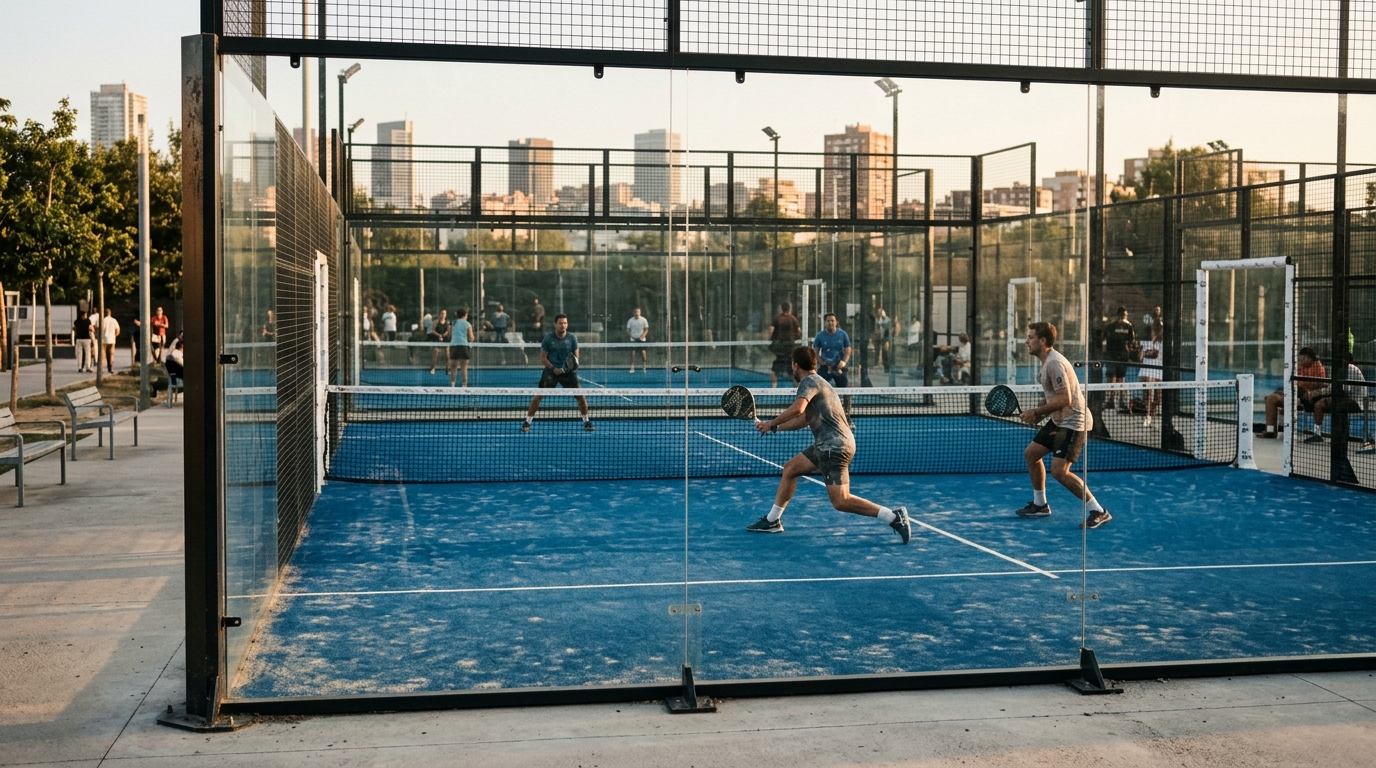
Committing capital to a padel club in 2026 requires looking past headline court tallies to assess real catchment economics. Global padel market growth has been slowing down for the past five years, but the map has fractured into two distinct realities. Sweden has been stuck in negative growth since 2023, leaving oversupplied venues to cannibalise court revenues. Meanwhile, severe court deficits drive the upside elsewhere.
The UK has climbed from 250 players per court in 2021 to 455 in 2026, while the US shifted from 227 to 313. Germany is currently the fastest growing area with 52% player growth in 2026 on 47% court growth, and right now the players per court ratio is increasing from 208 in 2021 to 280 players per court in 2026. I think that continued success in 2026 will come down to building communities, retaining your players and avoiding saturated hubs while targeting territories where court shortages remain acute. Let's take a look at those figures.
Global (YoY growth) Padel falls from +20.6% in 2021 to +7.0% in 2026, a 66% drop. The biggest single move comes between 2024 and 2025.

Defining the Global Padel Market in 2026
The commercial padel ecosystem spans manufacturing, real estate, coaching, and court booking software, yet its fundamental underwriting relies on one blunt operational metric: keeping four paying players rotating through a court every 60 to 90 minutes. This continuous player rotation forms the baseline for viable club underwriting.
I have noticed that investors often mistake cultural buzz for actual market velocity. While social media clips convey exponential acceleration, broader court expansion has cooled steadily for five years. That shift does not signal a dying sport. It's simply the end of speculative building, where rising tide economics once forgave poor site selection, inadequate amenities, and absent player retention.
Maturing Regions and the Reality of Global Padel Market Growth
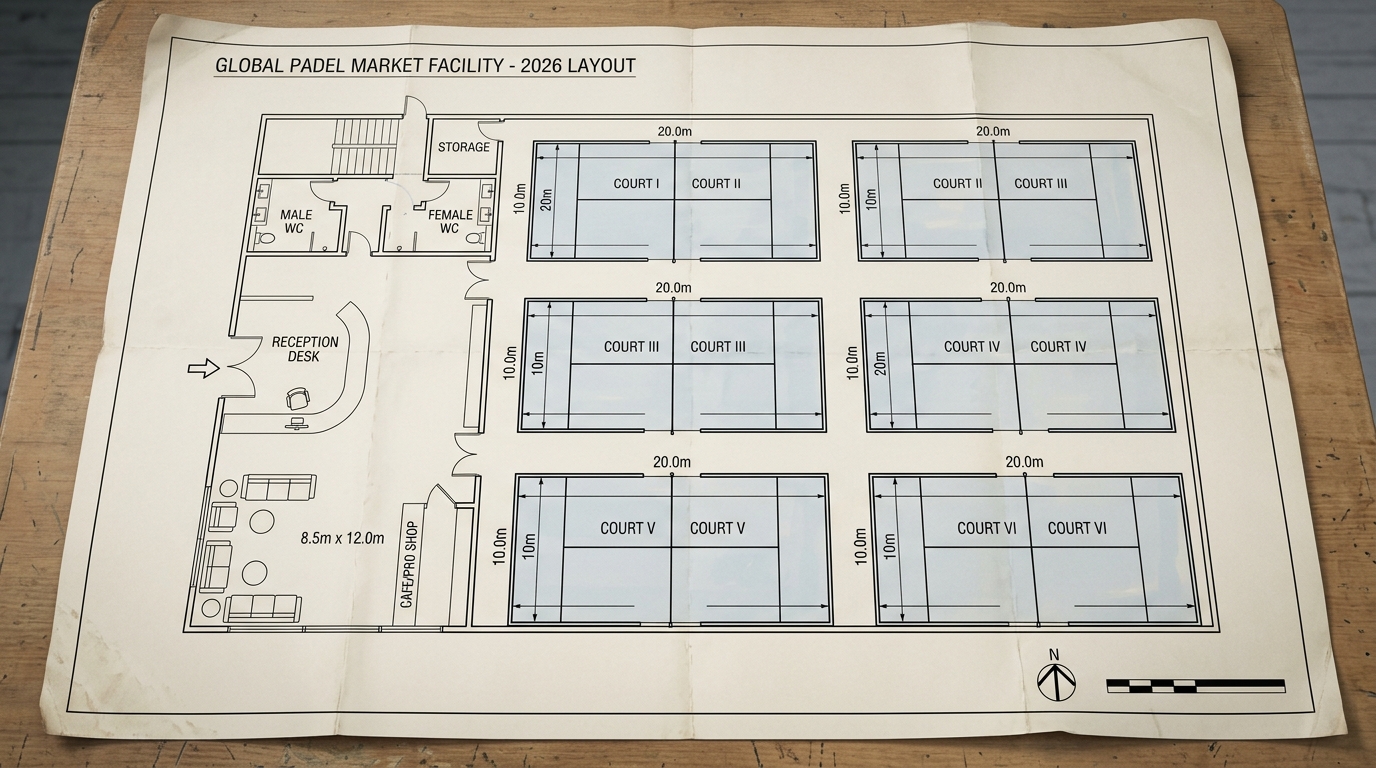
When looking at established regions, global padel market growth patterns become clear. Consider Spain, the spiritual home of commercial padel. Since 2021, year-on-year growth across the Spanish market has dropped into a slower cadence. The double-digit surges are done.
I chose Spain , the home of Padel as an established baseline. It's where the very first real Padel court was built. In Spain, annual court expansion cooled from 5.7% in 2021 to 2.1% by 2026, reflecting a mature market where greenfield court development has reached saturation.

Operators in Spain survive today through operational sophistication rather than pure court scarcity. Padel tourism along the Costa del Sol brings Northern European players south for winter training camps to keep courts occupied. But owners take note. The top clubs in Spain are moving away from market place apps such as Playtomic to lock down their players. Marbella padel clubs such as NAC (voted the best in Europe) are not to be found on any shared booking platforms. They have their own and are busier for it. Keep a close eye on the strategies employed by this market as its established and developed.
Sweden offers a harsh lesson in what happens when cheap capital ignores operational catchment limits. Between 2020 and 2022, Swedish operators opened over 3,000 courts, frequently clustering 15-court facilities inside suburban industrial warehouses with no secondary commercial amenities.
Between 2021 and 2026, annual facility expansion in Sweden collapsed from an unsustainable 118.8% to negative 1.7%. The market bottomed out at negative 14.3% in 2023 before court closures finally slowed the contraction.

Italy took a far more durable flight. With a massive 470% expansion between 2020 and 2026, it moved from regional obscurity into one of Europe's largest active player bases because court builds integrated into existing tennis clubs rather than relying on standalone speculative warehouses. Italy (Scale Rollout) Yoy Padel Growth falls from +155.6% in 2021 to +5.1% in 2026, a 97% drop.

High-Growth Frontiers Across the UK, US, and Germany
While mature markets fight over player share, high-growth frontiers tell the opposite story. The United Kingdom and the United States currently exhibit severe under-supply, which shows up directly in their local player-to-court ratios.
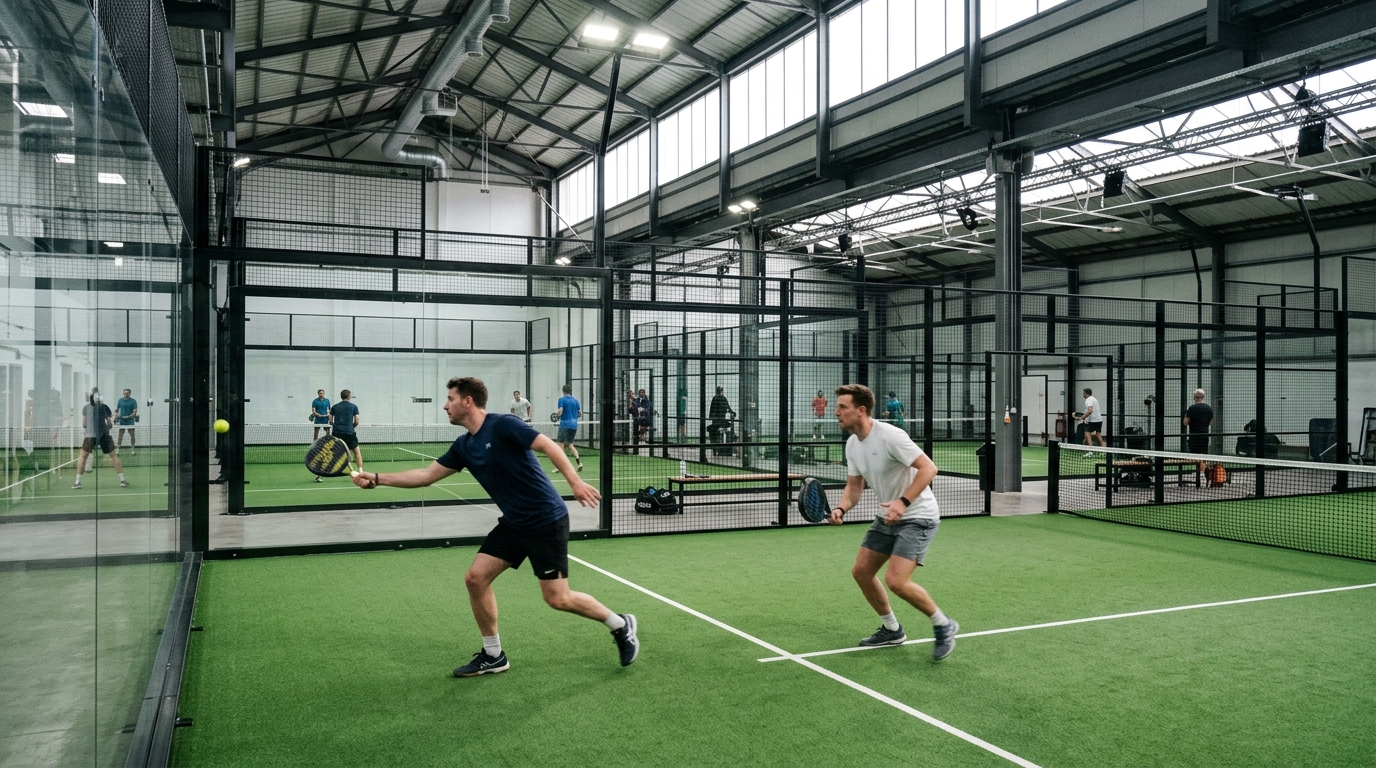
In the United Kingdom, there are 455 players per court in 2026 compared to just 250 in 2021. The growth of the British playing population has completely outpaced the planning approvals and physical construction of new facilities. Getting planning permission for canopy structures and finding industrial land with nine-metre ceiling clearances remains an arduous process in British municipalities, protecting early movers.
New court additions in the UK crested at 65.2% in 2023 before settling to 23.3% in 2026. This cooling does not reflect weak interest; it mirrors a strict British municipal planning system that chokes physical supply while player queues expand.

The United States displays a similar pattern of under-supply. The American market sits at 313 players per court in 2026, up from 227 back in 2021. Padel in the US is competing against pickleball for physical real estate and tennis for court conversions, yet consumer demand in metropolitan areas like Miami, Austin, and New York has run far ahead of facility construction.
United States (High-Growth Expansion) YoY Padel Growth falls from +83.3% in 2021 to +30.7% in 2026, a 63% drop. It peaks at +100.0% in 2022, then eases back to +30.7%, which suggests the growth is levelling off rather than accelerating. The biggest single move comes between 2023 and 2024.

These figures show where investment capital actually belongs. Building courts in an area with over 400 players per court guarantees high baseline use from day one.
The Pitfall of Relying on Marketplace Apps
Even in high-growth markets, new operators consistently walk into an operational trap that compromises their margins: relying entirely on third-party marketplace aggregators like Playtomic or MATCHi for player bookings.
Aggregators fill courts short-term.
In the first six months of operating a venue, marketplace apps seem like a gift by aggregating racket sports enthusiasts, exposing your facility on a map, and filling off-peak morning slots. But as more venues enter your catchment area, you are not building a dedicated customer base; you are merely renting access to a shared pool of transient players.
When local growth cools, the danger surfaces. Rival clubs on the same aggregation platform inevitably start running discount promotions, and because the aggregator holds the user account, email address, and payment token, you cannot contact your regulars outside the app feed. When a rival down the road drops peak slot prices by €10 on Playtomic, the platform alerts your own players to book there instead.
Operators who survive margin compression build their own booking and membership management infrastructure from day one. Setting up an independent platform requires more effort during pre-launch marketing, forcing you to run local campaigns and cultivate member loyalty through in-house leagues.
The payoff arrives two years later when competing venues open down the road and your customers remain inside your proprietary ecosystem to protect your pricing power.
What to Do Before You Sign a Lease
Opening a padel club in 2026 requires ignoring global macro averages and looking entirely at local supply and operations. Building in a saturated market like Sweden without a distinct membership moat is financial suicide. Securing permits in the UK or parts of the US gives you the buffer you need to survive initial planning delays.
Before committing capital to a commercial lease, audit local player density to confirm the regional ratio remains comfortably above 300 players per court. Launching proprietary booking and member management systems ahead of opening protects pricing power and user data, shielding your venue from aggregator discounting. Underwrite the site now. Ensure internal clearances reach nine metres, verify municipal acoustic allowances, and structure retail and coaching revenue to sustain the lease during off-peak morning hours.